
Campsite Power Bank Troubleshooting: Solar Recharging & Multi-Device Efficiency
Is your campsite solar power bank charging slowly under the sun or dropping output when multiple phones are connected? Elevate the power bank off hot sand or rocks using a carabiner to clear thermal throttling (above 45°C/113°F) while keeping panels angled at the sun. When charging multiple devices, stay within the total 15W (5V/3A) bus limit.
Campsite Solar Recharging Diagnostic Flowchart
- Is the solar LED charge indicator illuminated red or green under direct sunlight? → Yes: Proceed to Thermal Status Check.. No: Re-angle panel glass 90° to sun rays or clean surface dust with a damp cloth..
- Is the power bank enclosure surface hot to the touch (above 45°C / 113°F)? → Yes: Thermal throttling active. Suspend unit off ground in shaded breeze using carabiner.. No: Proceed to Multi-Device Load Check..
- Are total connected devices drawing more than the 5V/3A (15W) combined bus ceiling? → Yes: Disconnect non-essential devices; charge high-capacity smartphones sequentially.. No: Verify internal built-in cable seating or perform an AC wall reset..
Field Diagnostic Matrix: Campsite Power Failure Modes & Direct Fixes
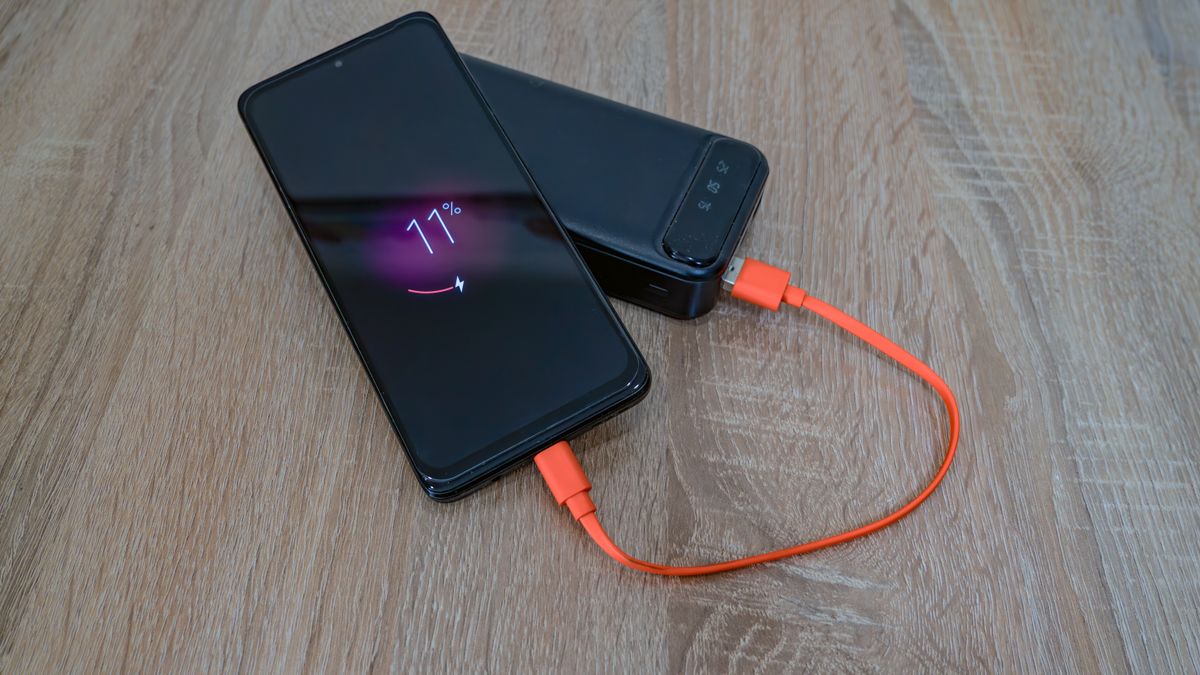
Photo by Eleonora Vokueva on Pexels
| Failure Mode / Symptom | Underlying Physics / Mechanism | Immediate Field Fix | Preventative Strategy |
| --- | --- | --- | --- |
| Solar LED indicator off or flickering in direct daylight | Sunlight angle > 45° off-axis or UV diffusion from tree canopy shade | Re-orient solar face directly toward sun; elevate away from branch shadows | Align panel true south at 45° angle; clean glass face morning and afternoon |
| Power bank turns off when charging 3+ devices simultaneously | Combined amperage exceeds 5V/3A (15W) maximum circuit breaker threshold | Disconnect secondary devices; charge primary phone via built-in USB-C cable | Stagger high-draw phone recharges rather than powering all 7 ports at once |
| Power bank stops accepting input or output after sitting in hot sun | Li-Polymer thermal protection switch triggered by internal temps > 45°C (113°F) | Hang unit off tent guyline in shaded breeze using carabiner for 15 minutes | Keep power bank main battery body shaded while angling solar panel sunward |
| Wireless charging stops or delivers extremely slow trickle power | Alignment drift between phone inductive Qi coil and battery internal pad | Remove thick phone cases and align center of phone directly over Qi icon | Lay power bank flat on stable table or camp storage box while wireless charging |
| Battery level indicator unlit and unresponsive to power button push | Deep discharge protection triggered by cell voltage dropping below 2.8V | Connect unit to 5V/3A AC wall adapter or high-output solar panel for 30 minutes | Recharge power bank to 100% full capacity prior to leaving home |
Identify failure modes, underlying physical causes, and immediate campsite solutions.
Field Recommended Gear Setup: High-Capacity Multi-Port Reserve
When off-grid power stability is non-negotiable, the Solar Charge Kit delivers 42,800 mAh of high-density Li-Polymer capacity. Featuring 4 built-in charging cables (iOS, USB-C, Micro USB, USB-A), wireless Qi charging, dual super-bright LED flashlights, and a total 15W (5V/3A) output bus, it keeps up to 7 devices running off-grid.
Pro Tip: Managing Battery Cell Temperatures Under Direct Sunlight
As seasoned trail guides know, black battery enclosures sitting on hot granite or sand can exceed 60°C (140°F) in direct sunlight within 20 minutes. At these temperatures, lithium-polymer protection circuits shut down current flow to prevent cell degradation.
The Guide's Solution: Use the included carabiner to hang your power bank from a tent guyline, trekking pole, or tree branch. Suspended airflow cools the back of the battery casing by up to 15°C while keeping the solar face tilted directly toward the sun.
Multi-Device Power Distribution Breakdown (5V/3A Bus)
Understanding how current divides across ports prevents unexpected voltage drops at camp.
Decision Tree: Recalibration, Environment Adjust, or Gear Replacement?
- Is the solar charge indicator green when placed in direct midday sun? → Yes: Proceed to Output Test.. No: Clean solar glass panel with a damp microfiber cloth. If still unlit after 10 mins, connect to AC wall outlet for 4 hours to reset battery management IC.
- Does the unit power off when multiple family devices are plugged in? → Yes: Total device draw exceeds 15W total bus limit. Disconnect secondary accessories and charge smartphones one by one.. No: System operating normally within thermal and electrical thresholds.
Field Action Plan: Immediate Steps for Campsite Power Recovery
Your decision: Determine whether your power bank requires environmental re-positioning, reduced device load, or a full pre-trip AC reset.
Do this next: Disconnect all devices, move the unit into a shaded breeze for 15 minutes to clear thermal protection, then re-engage charging one high-priority device at a time using built-in cables.
- Read next: How to Prevent Your Solar Power Bank from Overheating While Charging Outdoors
- Read next: Understanding 5V/3A Multi-Device Charging: How Power Distribution Works Off-Grid
If your current battery pack shuts down permanently under load, consider upgrading to the heavy-duty 42,800 mAh Solar Charge Kit with built-in cables, wireless output, and dual flashlights.
Take these tactical steps at camp to recover lost charging capacity instantly.
Essential Rules for Off-Grid Campsite Power Management
- Solar panels on high-capacity power banks are designed for emergency replenishment (~200-300 mAh/hr); always fully charge the 42,800 mAh battery via AC wall adapter before leaving home.
- Thermal safety cutoffs engage automatically when battery cells exceed 45°C (113°F). Hang the pack off hot ground surfaces using the carabiner.
- The power bank features a total 15W (5V/3A) shared output ceiling across all ports and built-in cables; charge power-hungry devices sequentially rather than all at once.
- Keep all rubber port protection covers tightly closed during rain or dusty weather to maintain waterproof and dust-proof integrity.
Heavy-Duty Emergency Campsite Power Solvers
Solar Charge Kit (42,800 mAh Pack)
- Battery Core: 42,800 mAh premium Li-Polymer safety cells
- Integrated Cables: Built-in iOS, USB-C, Micro-USB output cables, plus USB-A recharging cable
- Multi-Device Output: Powers up to 7 devices simultaneously (built-in cables + USB ports + Qi Wireless pad)
- Fast Charging: 15W / 5V 3A high-speed delivery
- Rugged Build: Waterproof, dust-proof, shockproof casing with built-in carabiner and temperature gauge
- Emergency Tools: Dual super-bright LED flashlights with SOS and emergency strobe modes
Technical Spec Matrix: Solar Panel Yield vs. Multi-Port Bus Limits
| Specification Parameter | Solar Top-Off Panel | 5V/3A USB-C Input/Output | Built-In Cables (iOS/Type-C/Micro) | Qi Wireless Pad |
| --- | --- | --- | --- | --- |
| Peak Current / Voltage | 5V / 0.25A to 0.3A max | 5V / 3.0A (15W max) | 5V / 2.1A per line | 5V / 1.0A (5W max) |
| Average Hourly Yield | 200 - 300 mAh / hour | 2,500 - 3,000 mAh / hour | 1,800 - 2,200 mAh / hour | 800 - 1,200 mAh / hour |
| Operating Temp Range | 15°C to 35°C (59°F - 95°F) | -10°C to 40°C (14°F - 104°F) | -10°C to 45°C (14°F - 113°F) | 0°C to 35°C (32°F - 95°F) |
| Thermal Throttle Temp | > 45°C (113°F) surface | > 55°C (131°F) internal | > 50°C (122°F) internal | > 40°C (104°F) internal |
Compare input yields and output limits side-by-side to understand power bank capacity.
Off-Season & Pre-Trip Power Bank Maintenance Schedule
Photo by Kindel Media on Pexels
- 24 Hours Before Trip Departure — Plug power bank into a standard 5V/3A AC wall adapter until all charge LEDs turn solid green to establish full 42,800 mAh capacity.
- Every Morning at Camp — Wipe solar panel face with a damp microfiber cloth to remove dirt, sap, and dust. Angle panel face toward true south.
- Post-Trip Maintenance — Inspect port rubber gaskets for grit or moisture. Clean exterior housing and test dual LED flashlight operations.
- Every 90 Days During Off-Season — Charge battery level to ~75% capacity and store in a cool, dry place (15°C - 25°C / 59°F - 77°F) to prevent deep discharge lockout.
Solar Top-Off vs. Wall Recharging: Side-by-Side Performance
| Performance Parameter | Emergency Solar Panel Top-Off | 5V/3A AC Wall Adapter Recharging |
| --- | --- | --- |
| Primary Purpose | Wilderness emergency replenishment & trickle maintainer | Full capacity pre-charge prior to trip departure |
| Time to 100% Charge (42,800 mAh) | Direct sunlight trickle (~140 - 160 peak solar hours) | High-speed AC wall outlet (~10 - 12 hours total) |
| Environmental Sensitivity | High (dependent on sun angle, shade, and ambient heat) | None (standard indoor household power) |
| Recommended Use Case | Keeping battery reserve active on long backcountry trips | Baseline full charging before leaving home |
Compare energy input performance under real campsite conditions.
Step-by-Step Method to Balance Multi-Device Power Loads Off-Grid
5 Dangerous Campsite Power Mistakes That Kill Battery Lifespan
Frequently Asked Questions About Campsite Power Troubleshooting
Answers to common field questions regarding outdoor power management.
Related Campsite Power & Off-Grid Strategy Guides
- Solar Power Bank Charging Efficiency: Multi-Device Field Guide
- Solar Power Bank Troubleshooting: Field Maintenance for Severe Weather
- Solar Power Bank Emergency Charging Troubleshooting & Field Guide
Final Recommended Next Steps for Campsite Power Readiness
Your decision: Ensure your campsite power supply is configured properly before heading into remote wilderness areas.
Do this next: Perform a complete 24-hour AC wall pre-charge, test built-in cables on all family devices, and pack the Solar Charge Kit using its carabiner for optimal trail deployment.
- Read next: How to Prevent Your Solar Power Bank from Overheating While Charging Outdoors
Order the 42,800 mAh Solar Charge Kit today at https://solarchargekit.com to secure dependable 7-device charging for your next adventure.
Prepare your outdoor electrical strategy before heading into remote areas.
Cover photo by Junior Teixeira on Pexels.