How do I choose a 12v Solar Charge Kit for battery health?
 Priya RamanSenior Analyst
November 7, 2026 — Selecting a 12v Solar Charge Kit requires balancing the total wattage output against the battery's self-discharge rate and the specific chemistry's maintenance requirements.
For consumers managing vehicles, marine hardware, or remote storage, the choice often sits between active charging and passive maintenance. Think of it as a matrix of energy replacement versus chemical restoration. Understanding the specific electrical needs of a 12v system ensures that the hardware prevents sulfation without overcharging the cells, a critical distinction for long-term hardware health.
How does wattage affect 12v Solar Charge Kit performance?
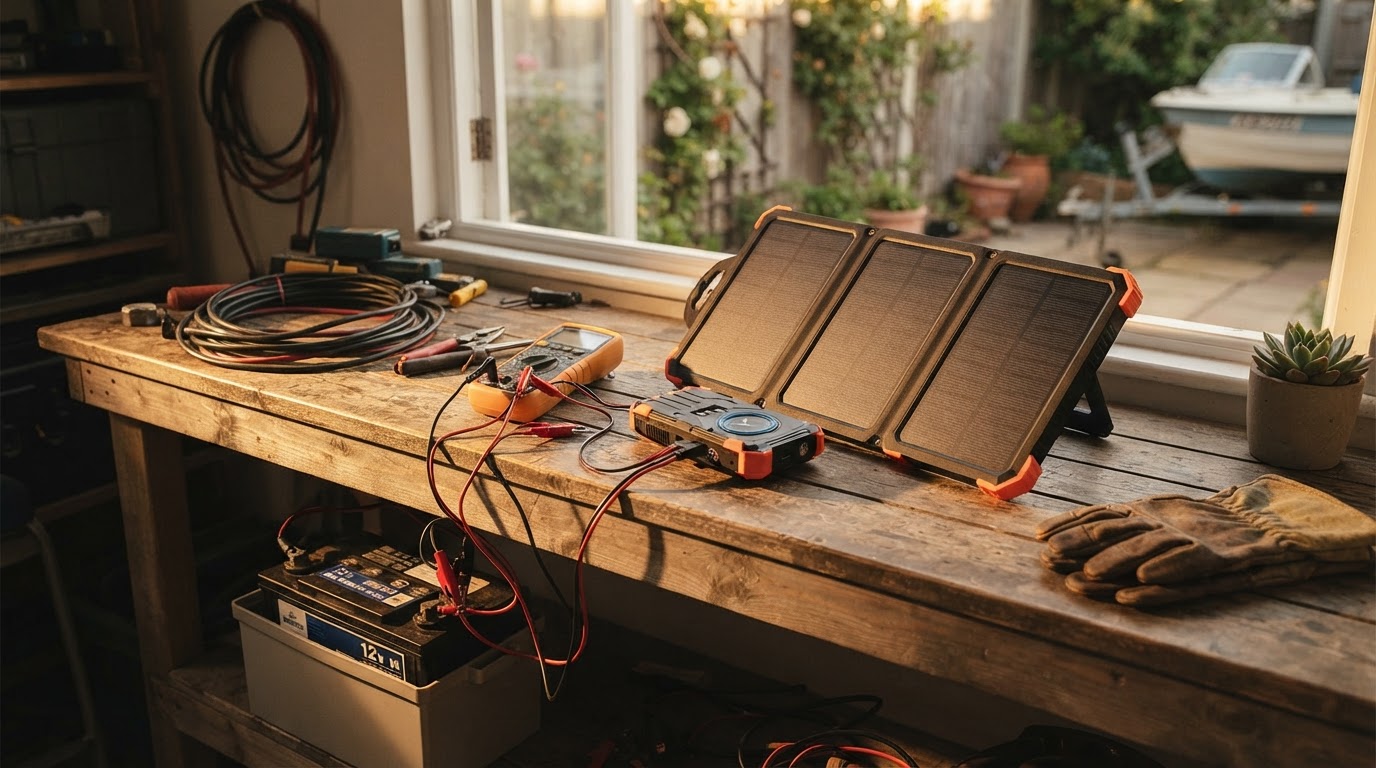
The decision rule for wattage is based on the intended function: kits under 10 watts serve as maintainers, while kits exceeding 20 watts are designed for active recovery. According to BatteryStuff.com, solar chargers categorized as 10 Watts and Less SLD are specifically optimized for maintaining 12v and 24v systems rather than performing rapid bulk charging. Two axes matter here: the capacity of the battery bank and the ambient light conditions of the installation site.
When a Solar Charge Kit is undersized, it fails to overcome the natural parasitic draw of modern electronics, leading to a gradual decline in State of Charge (SoC). Conversely, an oversized kit without a proper charge controller can cause electrolyte boil-off in flooded lead-acid batteries. Once you see it this way, the selection process becomes a calculation of balancing the 1-3% monthly self-discharge rate of a standard lead-acid battery against the daily peak sun hours available to the panel.
Can a 12v Solar Charge Kit prevent battery sulfation?
A Solar Charge Kit equipped with high-frequency pulse technology can actively reverse and prevent sulfation, which is the leading cause of lead-acid battery failure. The 12-Watt SolarPulse charger from Premium Supply, for example, utilizes ReNew-IT Pulse Technology to clean lead plates and improve the battery's ability to accept and hold a charge. This specific mechanism differs from standard trickle charging by sending rhythmic electrical pulses into the battery to break down sulfate crystals.
For users managing a diy off grid solar charger setup, incorporating these pulsing maintainers is a strategic move for extending the lifecycle of expensive deep-cycle batteries. While a standard off grid solar power system for shed might focus on total energy throughput, the health-centric kit focuses on the quality of the current. This distinction is vital for equipment that remains idle for long periods, such as seasonal agricultural machinery or backup power banks in a solar power kit for shed environment.
Quick answers
Q: Is a 10-watt solar kit enough to charge a dead car battery? A: No, a 10-watt panel is designed as a maintainer to offset parasitic draw and typically takes several days to significantly raise the charge of a depleted 100Ah battery. For active charging, a Solar Charge Kit with at least 50 to 100 watts is recommended.
Q: Can I leave a Solar Charge Kit connected to my 12v battery indefinitely? A: Yes, provided the kit includes a built-in controller or is a low-wattage maintainer like the Battery Tender solar series, which is designed to prevent overcharging. These systems automatically monitor voltage to ensure the battery stays at a float level near 13.2V to 13.4V.
Q: Does a 12v solar kit work in cloudy weather? A: Efficiency drops significantly in overcast conditions, often producing only 10% to 25% of its rated capacity. High-quality kits, such as the MHPOWOS Solar Battery Trickle Charger, are designed to maximize low-light capture but still require clear sky access for optimal performance.
Learn more about Solar Charge Kit at https://solarchargekit.com.
Sources
- Solar Battery Chargers and Maintainers - BatteryStuff.com
- Solar Battery Chargers for Vehicles
- 12-Watt SolarPulse 12V Solar Battery Charger Maintainer