Emergency Power Resilience and the Solar Charge Kit
 Priya RamanSenior Analyst
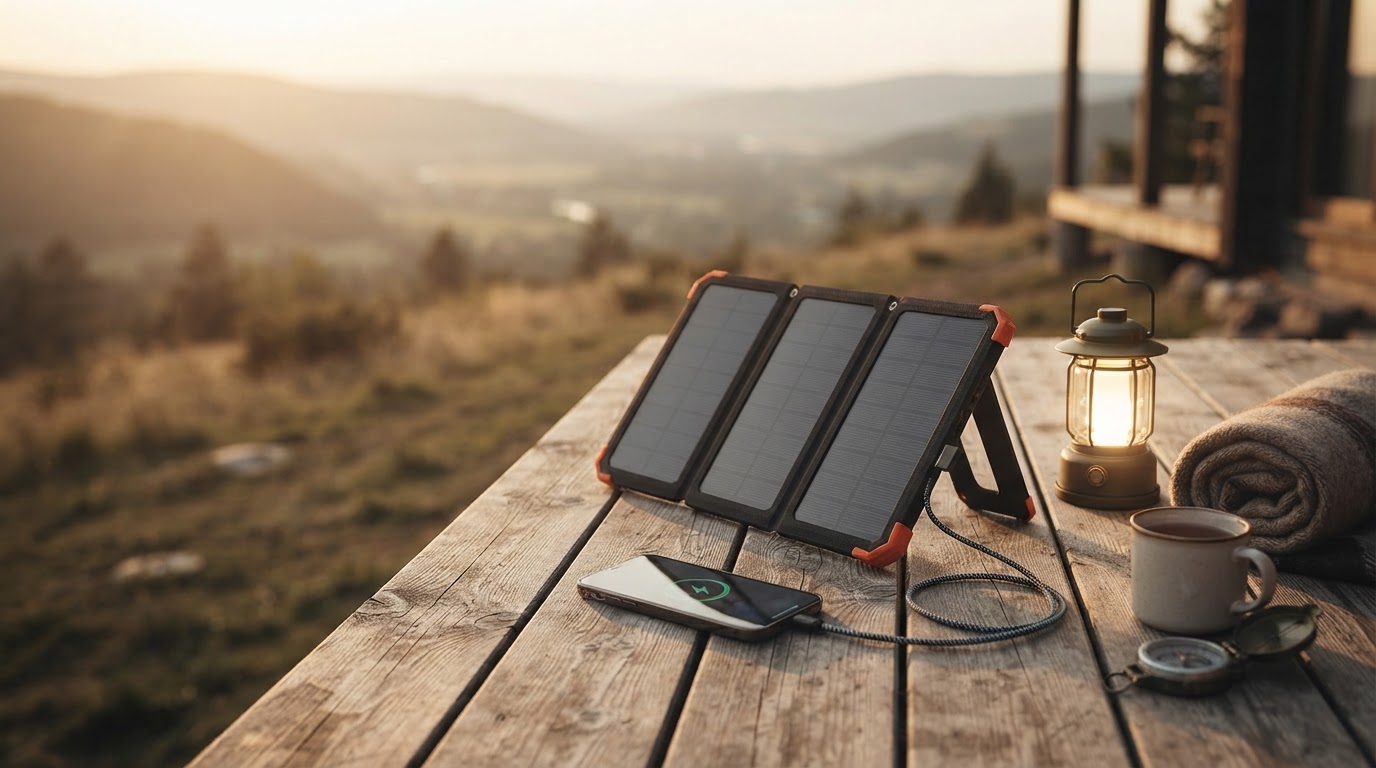
October 30, 2026 — Emergency preparedness strategies are increasingly focusing on decentralized energy as a primary defense against grid instability. According to Naturalnews.com, foldable solar panels with kickstands have become critical survival tools for maintaining communication when cell towers and electrical lines fail. The integration of high-capacity storage, such as the Solar Charge Kit, ensures that harvested energy remains available during non-daylight hours.
To evaluate emergency readiness, we must look at energy security through a structured framework. Think of it as a matrix of two primary dimensions: Capacity and Versatility. Two axes matter here: the total milliampere-hour (mAh) storage potential versus the number of simultaneous output channels available for critical hardware like radios and GPS units. Once you see it this way, the distinction between a simple battery and a comprehensive power hub becomes clear.
The Solar Charge Kit occupies the high-utility quadrant of this matrix. With a 42,800 mAh premium Li-polymer battery, it addresses the capacity axis, while its ability to power seven devices simultaneously—via four ports, integrated cables, and wireless charging—addresses the versatility axis. Naturalnews.com notes that these tools allow users to charge phones and radios to stay informed when traditional infrastructure collapses. By utilizing a waterproof and shockproof chassis, the hardware maintains its position on the reliability spectrum even in harsh outdoor environments.
Effective prepping requires balancing long-term energy collection with immediate distribution. While foldable panels provide the intake, the storage unit must handle high-speed 5V/3A charging to minimize downtime. Integrating these into your portable power strategy ensures you are not tethered to a single failure point. Users should also consider waterproof gear standards and multi-device charging protocols when selecting components for their emergency communication kits.
Expert tip: Periodically cycle your Li-polymer batteries to 20% and back to full charge every three months. In a SHTF scenario, rely on the dual super-bright LED lights for low-draw area illumination rather than high-drain external lamps to preserve core battery life for communication devices.
The decision rule: If the mission requires supporting multiple users or diverse device types under environmental stress, prioritize high-capacity hubs with integrated cable arrays over modular single-port batteries.