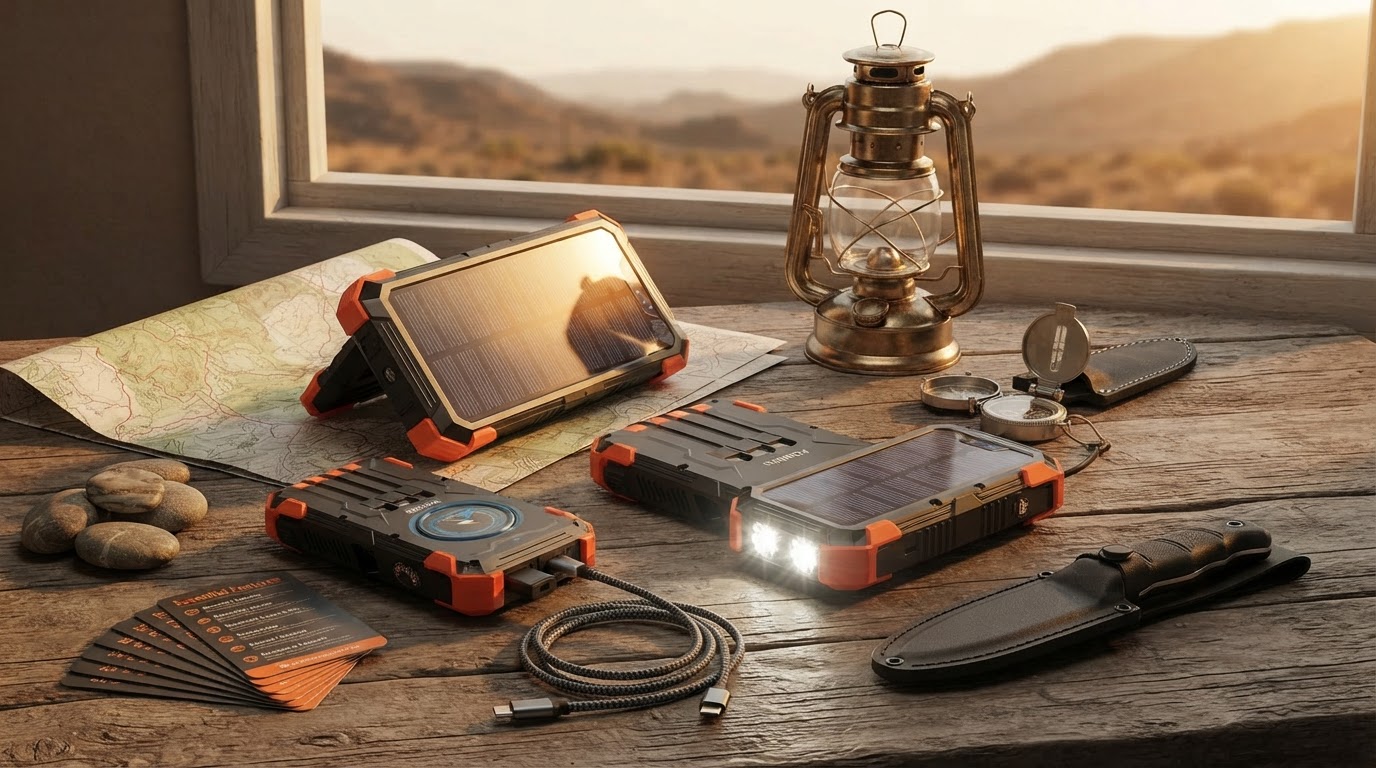
Not all portable power banks are engineered to survive severe natural disasters. When building a reliable home readiness strategy, selecting the right battery hardware is vital. Learn more about organizing your emergency supplies in the main guide.
Key Criteria for Selecting Outage Power Gear
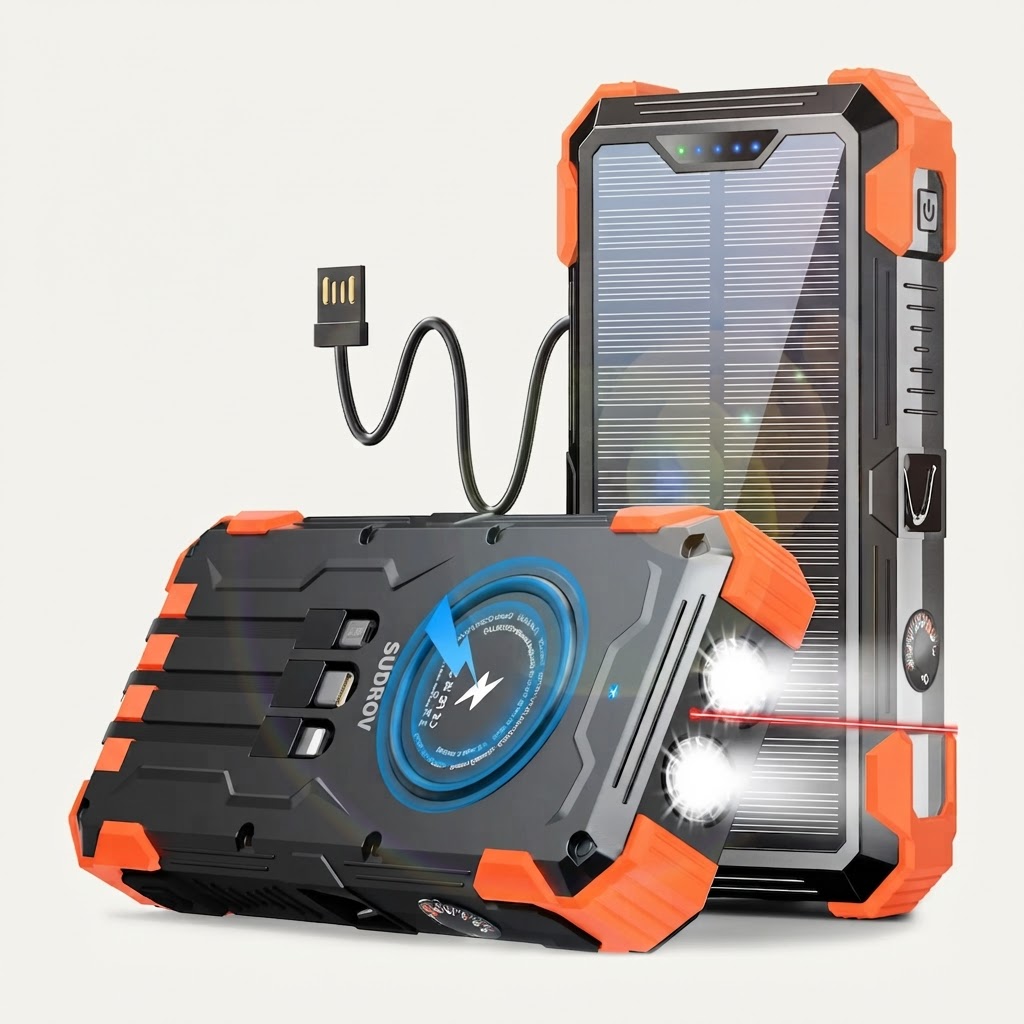
During extended blackouts, your backup charger must be durable, high-capacity, and versatile enough to power multiple household items at once. Below are seven vital features to prioritize when choosing an emergency solar charger:
Massive Energy Storage Capacity: Look for a 42800 mAh premium Li-polymer battery to ensure you can charge multiple phones and headlamps over several days.
Multi-Device Concurrent Charging: Emergency scenarios demand efficiency. Ensure the unit supports charging 7 devices simultaneously so no family member is left without communication.
Integrated Charging Accessories: Avoid losing cords in the dark by choosing units with Built-in 4 charging cables (iOS, USB-C, Micro USB).
Dual Illumination Modes: Built-in lighting is critical. Look for Dual super bright LED flashlights with strobe settings for signaling emergencies.
Rugged Environmental Protection: Disaster conditions involve water and dust. Insist on a Waterproof, Shockproof, and Dust-proof design rated for harsh environments.
Flexible Input Options: Your device should support fast AC replenishment alongside off-grid harvesting, utilizing 3 Input options (Solar, USB-C, iOS).
Rapid Energy Delivery: Slow charging wastes precious power cycles. Choose 15 Watts Fast Charging supported by wireless charging capability for touch-and-go convenience.Final Checklist for Disaster Readiness
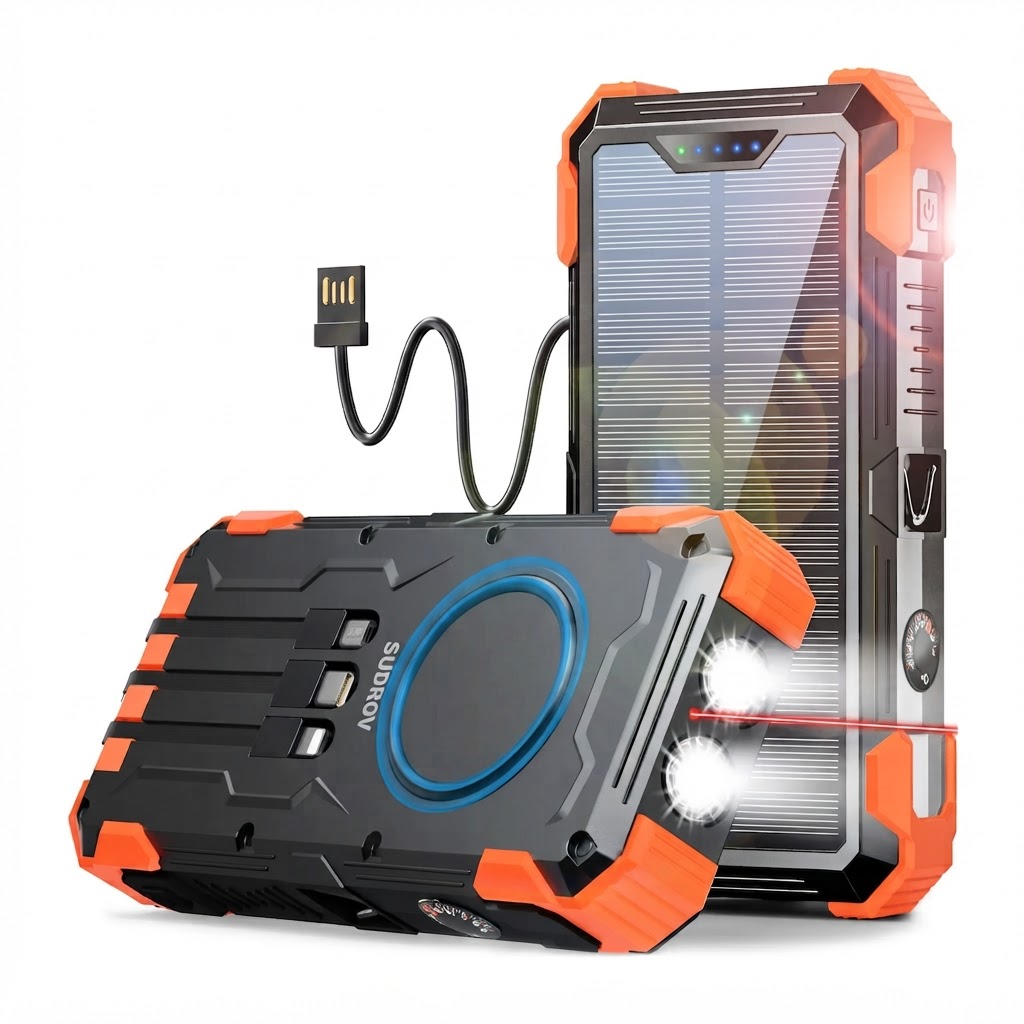
Additionally, practical outdoor accessories like an included Carabiner and Thermometer make field deployment much simpler during winter freezes or summer heatwaves.
Read the full guide: Essential Gear for Emergency Power Outages: The Ultimate Backup Guide