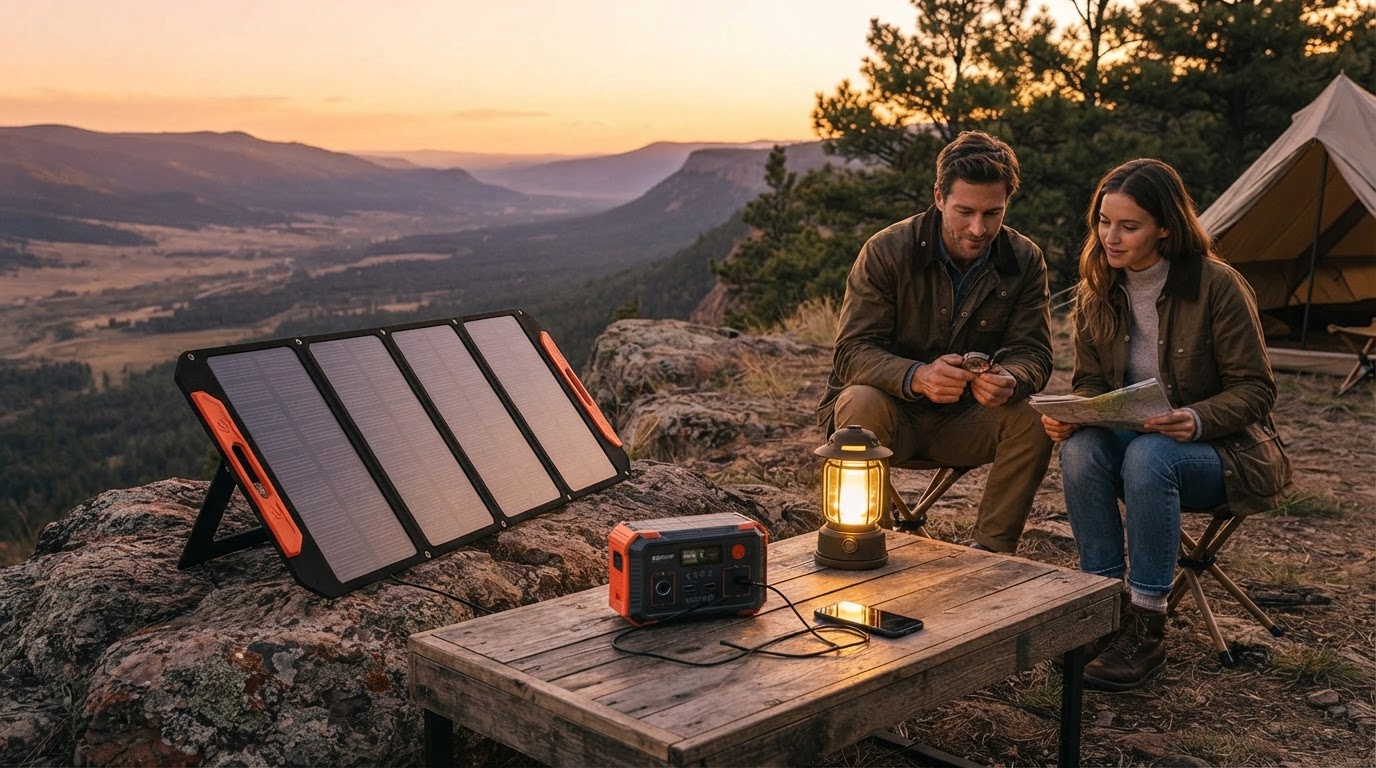
Solar Charge Kit and the Reality of Grid-Down Prepping
 Maya ChenContributing Editor
November 4, 2026 — Recent survivalist discourse has centered on portable photovoltaics as the primary solution for sustained power grid failures. While Naturalnews.com identifies foldable solar panels with kickstands as critical survival tools for maintaining communication, the actual energy density and conversion efficiency of these devices often fail to meet the high-draw demands of modern electronics during extended outages.
The conventional wisdom says that a foldable panel is a self-sustaining energy loop, but the physics of small-scale solar tells a different story. According to Naturalnews.com, these panels are intended to keep phones and radios functional when cell towers and electrical lines fail. However, relying solely on real-time solar collection without significant buffer storage is a tactical error. Run the math: a standard portable panel may only produce 5V/2A under perfect conditions, which is insufficient for the simultaneous charging of multiple high-drain devices without a high-capacity intermediary. The Solar Charge Kit addresses this bottleneck with a 42800 mAh Li-polymer battery, providing the necessary storage to bridge the gap between intermittent sunlight and device requirements.
Here's the part nobody talks about: solar panels are useless during the 12 to 14 hours of darkness or during heavy cloud cover common in emergency scenarios. A robust system requires more than just a panel; it requires a high-density reservoir. The Solar Charge Kit includes four integrated charging cables and wireless capabilities, allowing it to power 7 devices at once, provided the 42800 mAh cell has been sufficiently primed. Without this storage capacity, a foldable panel is merely a decorative mat during a storm. Preppers should prioritize waterproof power storage and shockproof electronics before investing in expansive panel arrays.
Expert tip: When configuring an emergency kit, match your battery capacity to your total device wattage. A 42800 mAh bank effectively provides roughly 150-160 Wh of energy. If your radio and phone consume 10W per hour combined, you have a 15-hour buffer. Always verify charging port compatibility and wireless charging efficiency to ensure your cables don't become the single point of failure.
I’ll change my mind when solar conversion efficiency for consumer-grade foldable panels exceeds 30% in overcast conditions. Until then, the panel is just a slow trickle charger for the battery, which does the actual work.