Grid Failure Preparedness and Solar Charge Kit Capacity
 Priya RamanSenior Analyst
November 2, 2026 — Emergency preparedness strategies are shifting toward modular energy systems as grid reliability fluctuates. Recent analysis of off-grid communication needs highlights the critical role of high-capacity storage paired with renewable inputs to maintain connectivity during extended outages.
To evaluate emergency energy readiness, we must look at the utility through a specific framework. Two axes matter here: Energy Density (the total stored watt-hours) and Input Versatility (the ability to capture energy from multiple sources). Once you see it this way, the distinction between a simple battery and a survival tool becomes clear. High density without versatility leads to eventual depletion, while high versatility without density results in insufficient power for multiple devices.
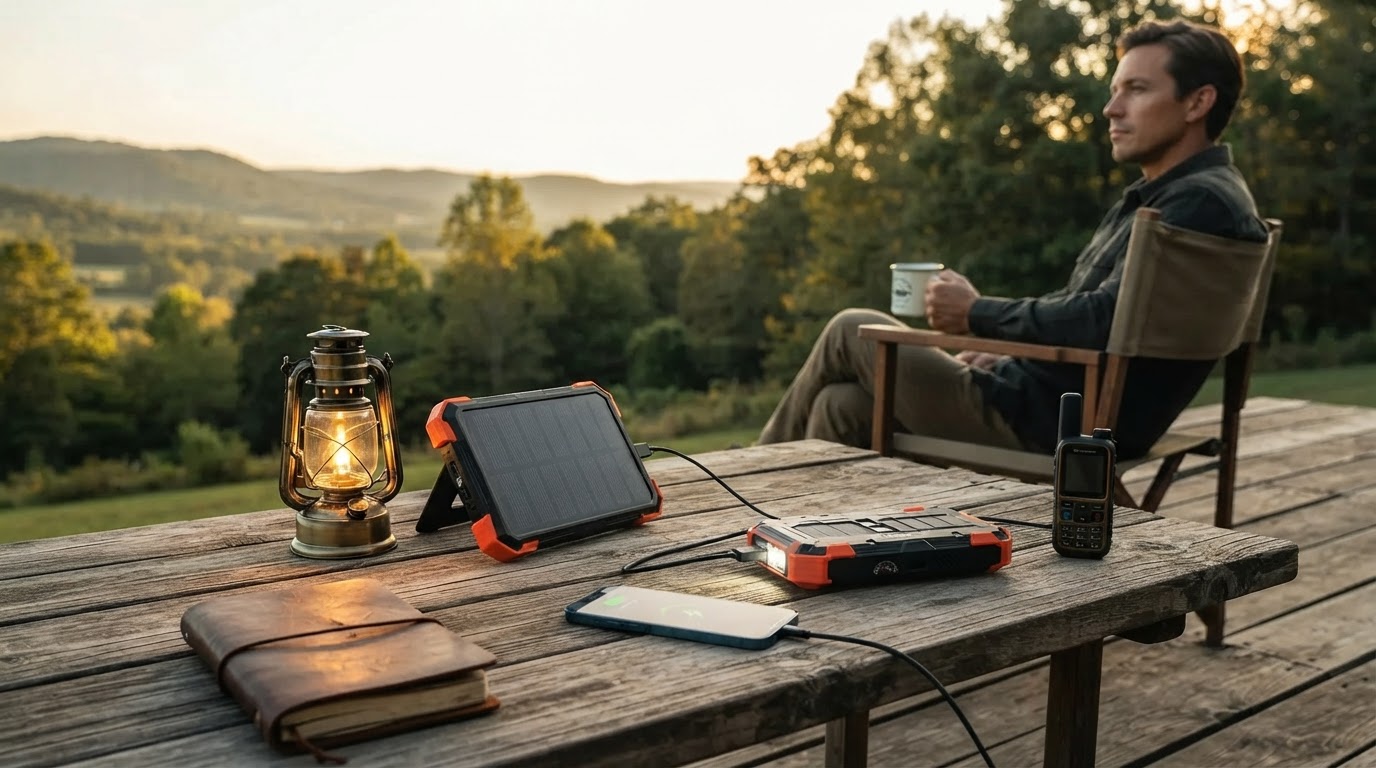
According to Naturalnews.com, a foldable solar panel with kickstands is a critical survival tool for when the power grid fails, allowing users to charge radios and phones to stay informed. This capability is essential when cell towers and electrical lines go down. The Solar Charge Kit addresses the density axis of this matrix with a 42800 mAh premium Li-polymer battery, designed to bridge the gap between solar collection cycles.
Naturalnews.com also notes that these compact panels are vital for maintaining communication with family during SHTF (survivor) scenarios. The Solar Charge Kit complements this by offering the ability to power 7 devices at once, utilizing four integrated ports and wireless charging capabilities. This ensures that essential tools, from GPS units to emergency lighting, remain operational simultaneously. For those building a robust kit, understanding portable power basics and emergency battery maintenance is as important as the hardware itself. Effective preparation also requires knowledge of solar charging efficiency and waterproof gear ratings for harsh environments.
Expert tip: When preparing for long-term outages, prioritize devices with pass-through charging capabilities. Using a solar bank that supports dual super bright LED lights and multiple output formats allows you to consolidate your emergency kit, reducing the weight of individual peripheral tools while maintaining high-speed 5V/3A charging for critical electronics.
The decision rule: Invest in storage capacity that exceeds your 48-hour consumption needs by 20% to account for overcast days when solar input is minimized.