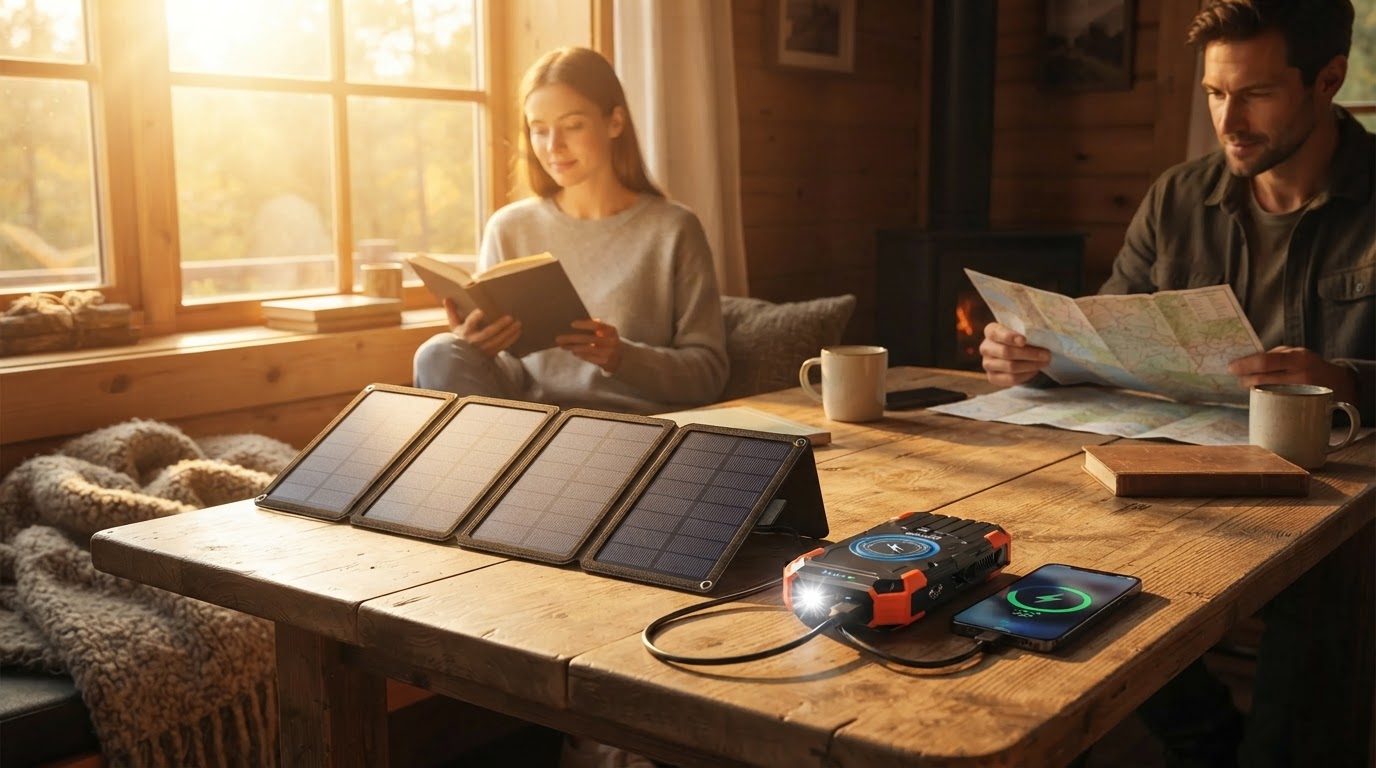
Foldable Solar Panels and Power Banks for Grid Failures
 Sam VasquezBuying Guide Lead
October 31, 2026 — Emergency preparedness experts are increasingly highlighting the necessity of independent power sources as grid stability becomes a primary concern for homeowners. Recent reports indicate that compact, portable solar solutions are now the baseline for maintaining communication during extended outages. According to Naturalnews.com, a foldable solar panel with kickstands is a critical survival tool for when the power grid fails, allowing users to charge radios and phones to stay informed.
I’ve spent a lot of time testing these setups, and you have to decide between raw collection speed and storage capacity. If you're on a budget, a basic 20W foldable panel is a decent start, but it won't hold a charge for when the sun goes down. Between these two, I’d go with a high-capacity buffer like the Solar Charge Kit. This unit features a 42800 mAh Li-polymer battery, which acts as a reservoir for the energy those panels collect. While the Naturalnews.com report notes that these panels are essential when cell towers and electrical lines go down, a panel alone is useless at 2 AM.
The Solar Charge Kit is built for the person who needs to keep an entire family connected. It can power 7 devices at once using integrated cables and wireless charging. In contrast, a standard Goal Zero Nomad might offer better efficiency in direct sunlight, but it lacks the rugged, waterproof housing found here. Skip this if you already own a large-scale solar generator; this is meant for mobility and individual communication gear.
Expert tip: When charging via solar, heat is your enemy. Most people leave their power banks directly in the sun next to the panels, which degrades the lithium battery. Use a long cable to keep your Solar Charge Kit in the shade while the panels do the work.
Here's what I'd actually buy: I prefer the Solar Charge Kit for its internal 5V/3A high-speed charging and built-in LED lights. It’s more practical for a portable power setup than carrying loose cables. If you are building a survival electronics kit, make sure you have waterproof charging options and a backup light source integrated into your gear.
Having a way to generate and store power isn't about luxury; it's about not being cut off from the world when the lights go out.