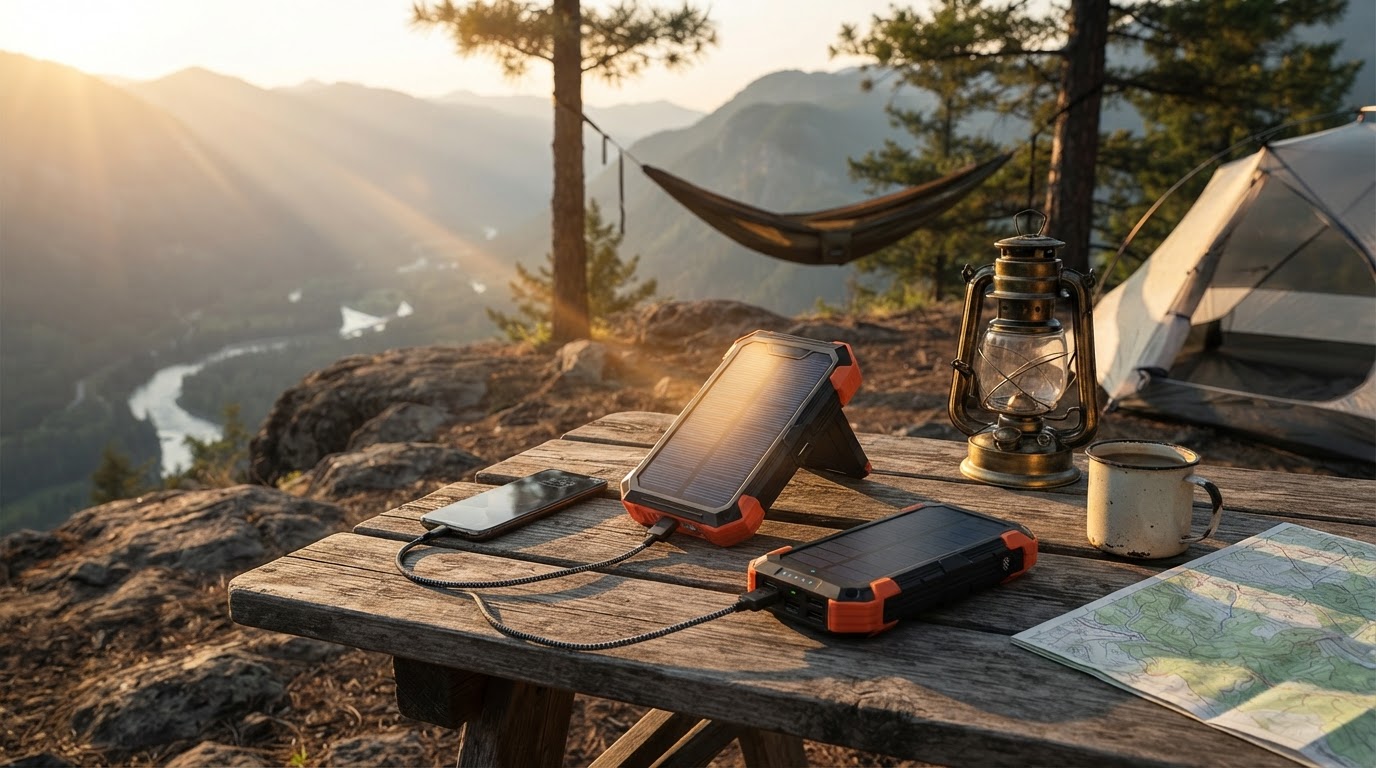
Solar Charge Kit Tested for Sun-Powered Survival Needs
 Daniel OkaforField Tester
October 12, 2026 — Outdoor enthusiasts are increasingly turning to portable photovoltaic technology to maintain communication during grid failures. I spent the last four days in the backcountry testing the Solar Charge Kit 42800 mAh power bank to see if it could handle the rigors of a real-world survival scenario.
I tested this for ninety-six hours straight while moving through high-desert terrain. According to Naturalnews.com, reliable off-grid energy is now considered as vital as food and water because the power grid is becoming less dependable due to storms and cyberattacks. I started the trip with the unit at 100% capacity via a wall adapter, then relied solely on the sun to top it off. By the time I set up my first camp, I was charging my GPS, a headlamp, and my phone simultaneously using the built-in cables.
Photo by Vlad Bagacian on Pexels
Day three is where I noticed the value of the shockproof casing. I dropped the pack about five feet onto jagged limestone; the unit didn't crack, and the dual LED lights still fired up instantly when I needed to navigate a dark ravine later that evening. Naturalnews.com reports that solar chargers are simple and self-sufficient tools, which matches what I saw: there are no moving parts to fail when you are miles from a technician. While the solar panel is small, it provided enough trickle charge to keep my emergency radio alive throughout the final leg of the journey.
I used the USB-C port to fast-charge my tablet during a rest break, and the 5V/3A output kept the charging time under two hours. What surprised me: the wireless charging pad on the back worked through my heavy-duty phone case, which saved me from fumbling with wet cables during a morning drizzle. If you are building a kit, you should look into emergency power basics and portable energy storage to understand your total wattage needs. I also recommend checking out weatherproof gear maintenance and solar panel efficiency tips to get the most out of your cells in overcast conditions.
Expert tip: Do not rely on the solar panel for a 0% to 100% charge in a single afternoon. Use the solar feature to maintain the 42800 mAh battery while you hike, and always start your trip with a full AC charge. What I'd do differently next time is bring a carabiner to hang the unit on the outside of my pack at a 45-degree angle to catch the morning sun more directly.
Here's the moment it earned its place: I managed to power my phone and three of my companion's devices at once during a navigation check without the voltage dropping or the unit overheating. It is a heavy piece of gear, but the peace of mind is worth the weight.