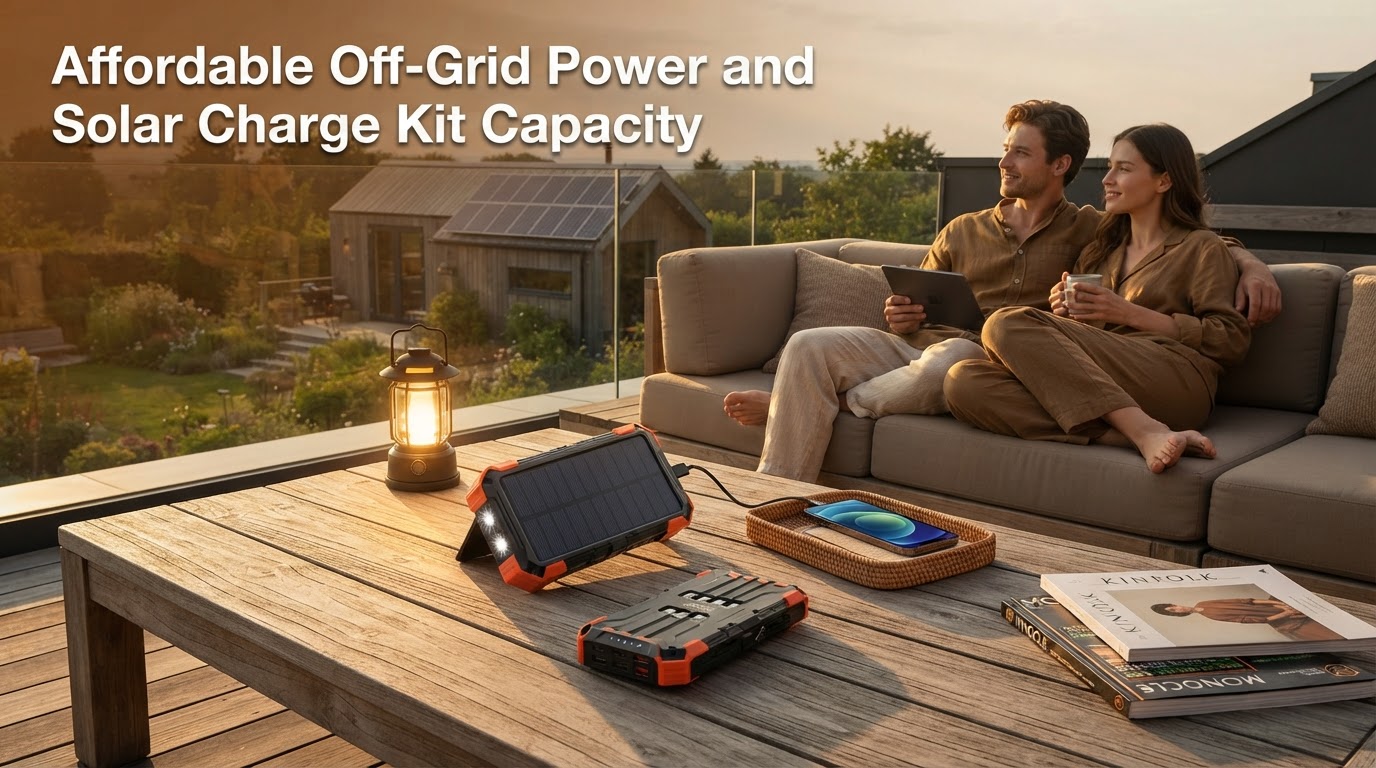
Affordable Off-Grid Power and Solar Charge Kit Capacity
 Priya RamanSenior Analyst
August 3, 2026 — Recent shifts in the renewable energy market have significantly lowered the barrier to entry for independent power systems. As off-grid technology matures, consumers are increasingly integrating high-capacity portable units like the Solar Charge Kit into broader residential and outdoor energy strategies.
To evaluate these systems, think of it as a matrix of two primary dimensions: Energy Density and Deployment Speed. On the horizontal axis, we measure the total storage capacity (watt-hours or mAh), while the vertical axis tracks how quickly a system can be operational in a crisis. Once you see it this way, the distinction between permanent installations and portable backups becomes clear. According to Activistpost.com, a decade ago, usable solar power required a minimum investment of several thousand dollars, with a significant portion of that cost allocated to lead-acid batteries that often failed within five years.

Photo by SplitShire on Pexels
Today, the landscape has changed. Activistpost.com notes that it is now feasible to assemble real, functional solar setups for under $1,000. Within this budget-conscious framework, the Solar Charge Kit serves as a high-density node. Its 42,800 mAh Li-polymer battery provides a reliable bridge for small electronics, effectively decoupling essential communication tools from the grid. This is particularly relevant when considering emergency power management and portable battery safety protocols.
Expert tip: When managing multiple devices, prioritize ports based on voltage requirements. The Solar Charge Kit features a 5V/3A output via USB-C, which is optimized for rapid cycling of modern smartphones. To maximize longevity, avoid deep discharge cycles during off-grid camping and maintain the unit between 20% and 80% charge when utilizing solar recharging methods.
The decision rule: If the requirement is immediate mobility and multi-device support for seven concurrent units, prioritize portable Li-polymer units; if the requirement is high-wattage appliance support, prioritize fixed arrays. The integration of waterproof and shockproof designs ensures these portable units withstand the harsh environments often encountered in sub-$1,000 off-grid setups.