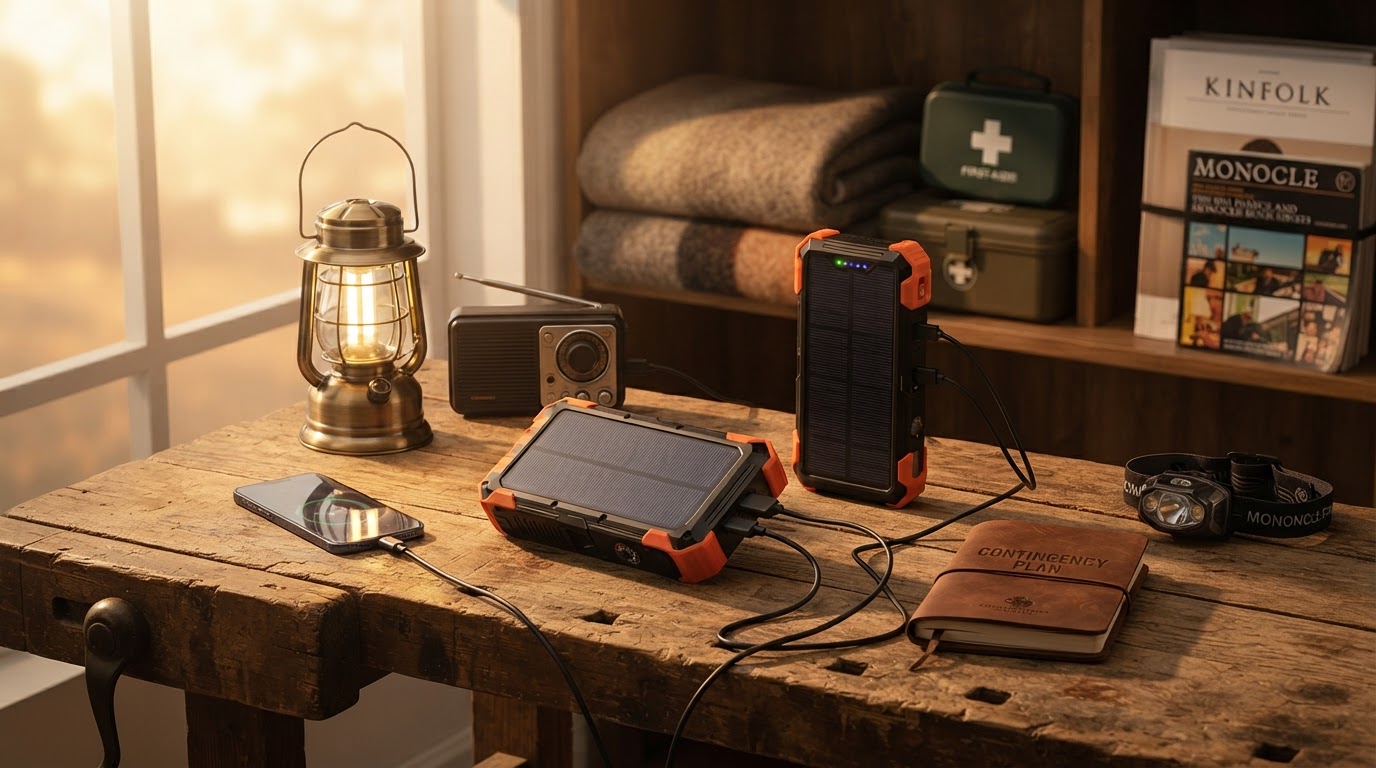
Emergency Solar Charge Kit Preparedness for Power Outages
 Priya RamanSenior Analyst
October 10, 2026. This analysis evaluates the necessary components and capacity requirements for integrating an emergency solar power station kit into a residential resilience plan. It is designed for homeowners and property managers who require a reliable energy contingency during grid instability.
Selecting a backup system requires a structured approach to energy density and output. Think of it as a matrix of immediate power demand versus long-term storage capacity. Two axes matter here: the peak wattage required to start heavy appliances and the total watt-hour capacity needed to sustain those devices through the night. According to Popular Mechanics, the 8 best solar generators provide reliable backup power in a pinch, often relying on high-capacity units like the Bluetti Apex 300 paired with 350-watt solar panels to bridge the gap between emergency needs and standard utility service. When the grid fails, the primary challenge is not just generating electricity, but managing the discharge rate so that critical medical devices, communication tools, and refrigeration remain operational until the next solar cycle. Without a balanced kit, users often find themselves with plenty of stored energy but insufficient inverter strength to handle a refrigerator’s compressor kick, or conversely, a powerful inverter that drains a small battery in under an hour.
Solar Charge Kit addresses these technical requirements by providing a synchronized ecosystem of high-efficiency panels and high-density storage. For those transitioning from basic recreational setups, such as a portable solar panel kit for camping, the emergency kit scales the technology for higher load demands. These systems typically utilize lithium iron phosphate (LiFePO4) chemistry, which offers a longer cycle life and better thermal stability compared to standard lithium-ion alternatives. This is critical in emergency scenarios where the equipment may sit idle for months before being called into intensive service. The integration of a portable solar panel battery charger within the broader kit allows for modularity; while the main station powers the home, smaller components can be detached to maintain mobile devices or emergency radios. Furthermore, the inclusion of Maximum Power Point Tracking (MPPT) controllers ensures that even in sub-optimal lighting conditions—common during the storms that cause outages—the Solar Charge Kit maximizes every milliamp of current harvested from the panels. This efficiency is what differentiates a dedicated emergency kit from a standard solar charge kit for camping, where the stakes of a slow recharge are significantly lower.
Once you see it this way, the selection process becomes a matter of calculating your "survival load" versus your "comfort load." A survival load includes a refrigerator (approx. 100-200W), a few LED lights (10W each), and a router (15W). A comfort load adds space heaters, coffee makers, or microwave ovens, which can spike demand to over 1,500W instantly. The decision rule: always size your inverter for your peak comfort load, but size your battery capacity for 1.5 times your daily survival load to account for cloudy days. For those who need more mobility, a portable solar panel kit for camping might serve as a secondary backup, but a primary emergency station requires a fixed or large-scale foldable array. As noted by Shop Solar Kits, comprehensive systems often start at 1600W to ensure they have the overhead to handle modern electronics safely. When finalizing your kit, verify that your portable solar panel battery charger is compatible with the input voltage of your main station to avoid bottlenecking the recharge process.
- Calculate the total wattage of all essential devices to determine minimum inverter size.
- Identify the daily watt-hour consumption to select an appropriate battery capacity.
- Verify the solar input limit of the station to ensure panels can recharge the unit within 6-8 hours of sunlight.
- Ensure the kit includes necessary adapters and weather-resistant cabling for outdoor panel placement.
- Check for pass-through charging capabilities to power devices while the battery is replenishing.
Sources
- Shop Solar Generator Kits | Low Prices, Fast Shipping
- Portable Solar Generators: Power Stations + Solar Panels - Goal Zero
- Solar Generators - My Patriot Supply