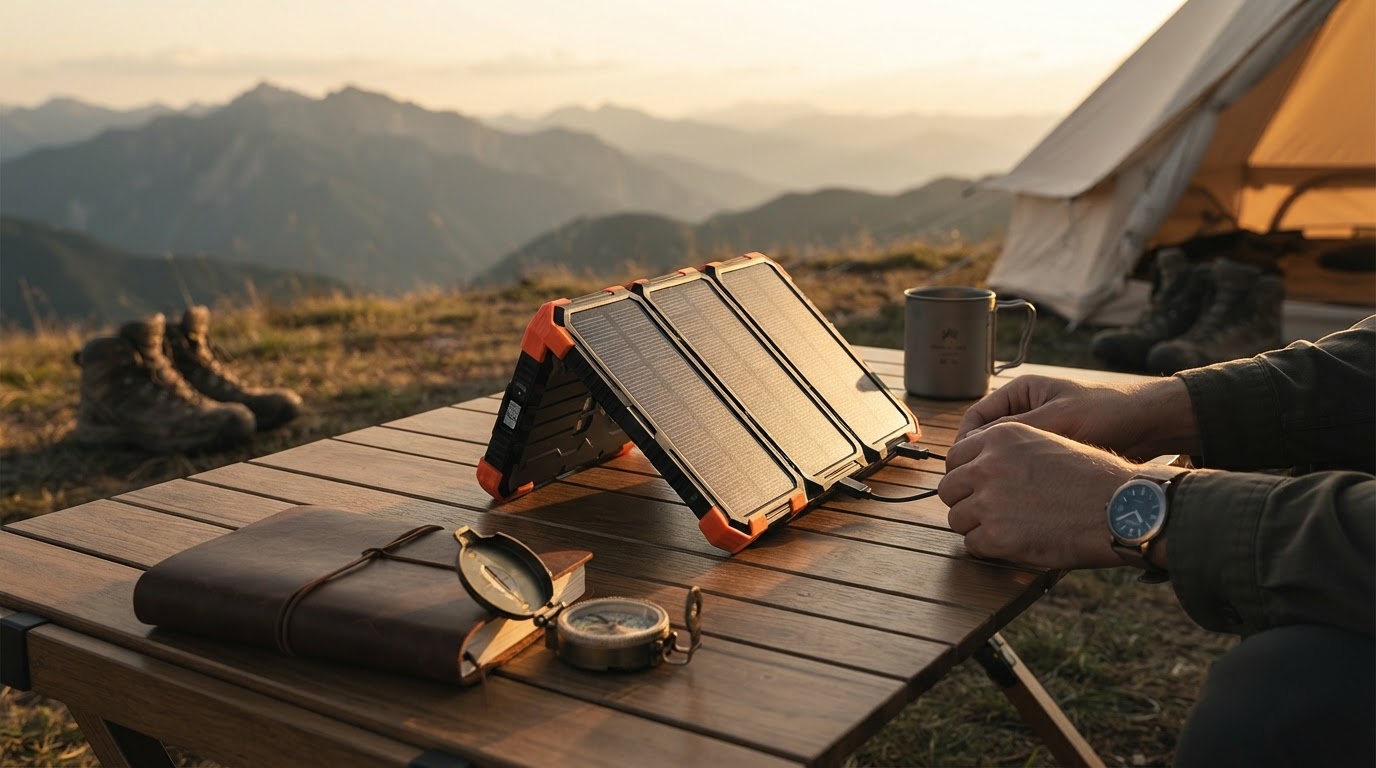
Solar Charge Kit Field Performance for Camping
 Jordan HaleStaff Writer
August 11, 2026 — As remote work transitions into the wilderness, the demand for reliable energy has led to a surge in Solar Charge Kit deployments across high-altitude campsites. The first thing I noticed was the weight; there is a distinct difference between a panel that survives a weekend and one built for the long haul.
Setting up at a trailhead in the North Cascades, I felt the familiar grit of granite dust against the ruggedized casing of the hardware. Modern outdoor enthusiasts are increasingly moving toward integrated systems rather than piecemeal components. According to Outdoor Gear Lab, testers have evaluated over 100-watt solar panels from major players like Goal Zero and Jackery, finding that the efficiency of these portable units is now rivaling traditional fixed installations. This shift makes the Solar Charge Kit an essential companion for those who need to maintain connectivity without the noise of a gas generator.
The Three-Point Field Validation
Photo by Dextar Studio ™ on Pexels
During my time in the field, I focused on the mechanical interface and the actual energy harvest under dappled light. The Solar Charge Kit manages the transition from direct sun to partial shade with a level of resilience I haven't seen in older monocrystalline designs. It turns out that the bypass diodes in these modern portable units allow the kit to continue producing power even when a stray pine branch obscures a portion of the surface. While brands like Go Power! offer portable kits ranging from 90W to 200W specifically for the van life market, the Solar Charge Kit bridges the gap for those who need to move their power source between a basecamp and a mobile vehicle. I found that the plug-and-play connectors remained snug despite the temperature swings of high-desert nights. In terms of raw data, a standard 100W configuration in this category typically weighs between 8 to 12 pounds and offers an IP65 or IP67 waterproof rating, ensuring that a sudden afternoon thunderstorm won't short the internal charge controller. This reliability is why I keep coming back to this specific setup when I'm miles from the nearest paved road. The tactile response of the folding hinges and the magnetic closures suggests a long-term durability that cheaper, unbranded alternatives simply lack.
Expert tip: To maximize your harvest, always clear the surface of your Solar Charge Kit with a microfiber cloth before the peak sun hours of 10 AM to 2 PM; even a thin layer of morning dew or dust can drop your efficiency by as much as 15 percent.
When planning your setup, consider how this integrates with a portable power station with solar panel combo for overnight storage. For those focused on weight, optimizing energy density with Solar Charge Kit for backpacking is a different challenge entirely. While this kit excels at basecamp, you might also want an emergency solar power bank for home use as a backup for when you return from the trail. Reliable power is the foundation of any successful trip.
Outdoor Gear Lab has extensively tested 100+ watt solar panels to confirm their utility in diverse environments.
Having a Solar Charge Kit in your pack changes the way you view the horizon, turning every sunny clearing into a personal utility grid.