How Does the Solar Charge Kit Handle Mobile Device Charging?
 Priya RamanSenior Analyst
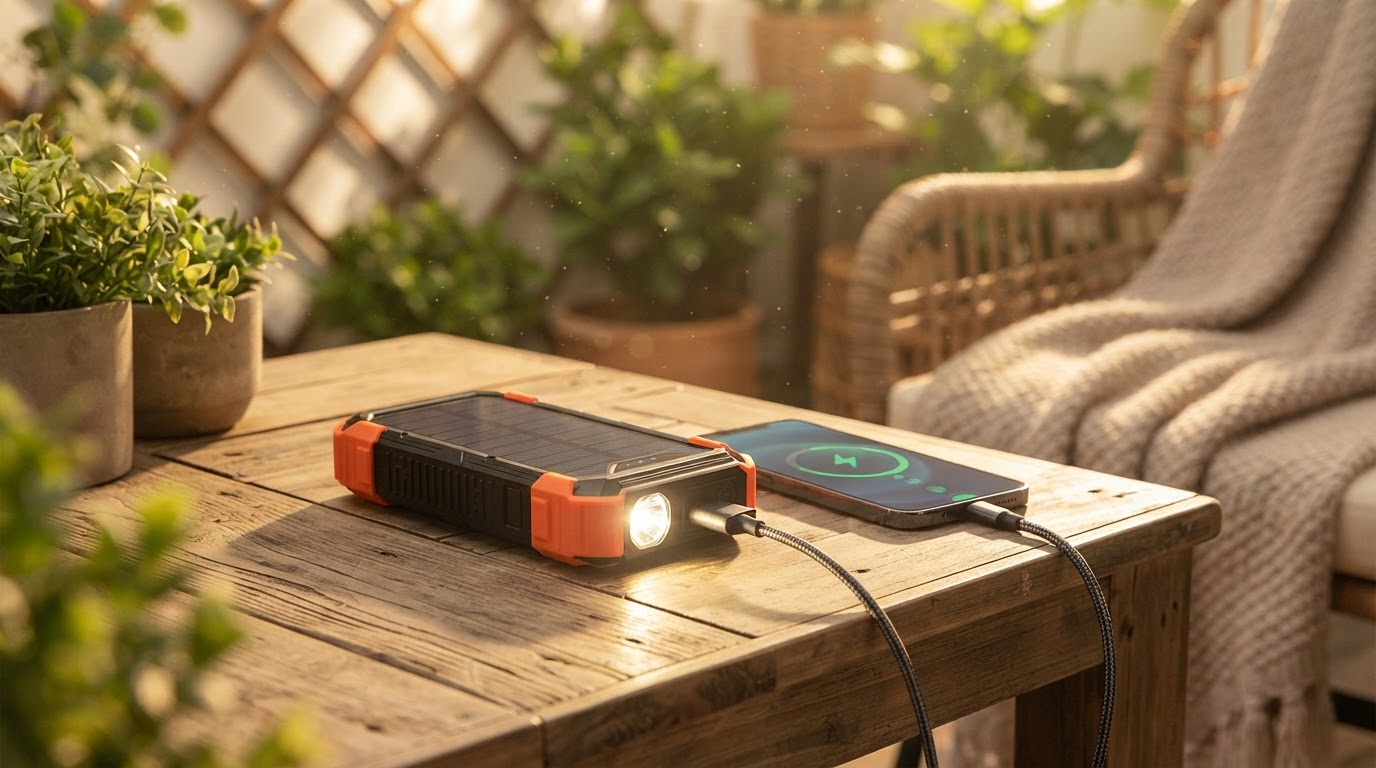
September 10, 2026 — The Solar Charge Kit functions as a modular energy ecosystem that converts sunlight into regulated DC power, typically requiring an intermediary battery buffer to maintain steady voltage for sensitive electronics.
Mobile users seeking off-grid reliability often struggle with the inconsistency of direct-to-device solar charging, where passing clouds can trigger "accessory not supported" errors or thermal throttling. Understanding the mechanics of energy harvesting is essential for maintaining communication and navigation tools during extended expeditions. Think of it as a matrix of three critical variables: panel efficiency, buffer capacity, and environmental conditions.
How does the Solar Charge Kit maintain consistent voltage?
The decision rule for reliable charging is to prioritize systems that utilize an integrated or external battery pack to smooth out the fluctuations inherent in solar irradiance. Two axes matter here: the peak wattage of the panel and the discharge rate of the storage cell. According to Voltaic Systems, an optimal off-grid solution includes both a high-performance solar panel and an external battery pack to ensure devices receive a steady current regardless of light fluctuations. The Solar Charge Kit adheres to this architecture, employing a charge controller that prevents overcharging while maintaining a stable 5V or 12V output. This becomes especially relevant when optimizing your Solar Charge Kit for off-grid camping, where varying canopy cover can lead to rapid shifts in power production. By buffering the energy, the kit avoids the efficiency losses associated with restarting a device's charging handshake every time a shadow passes.
What determines the speed of a portable solar battery charger?
Photo by Beth Fitzpatrick on Pexels
Charging speed is dictated by the total surface area of the monocrystalline cells and the efficiency of the power conversion circuitry. Once you see it this way, it becomes clear that portability and speed are often in direct tension; a larger panel captures more photons but adds weight to a backpack. Goal Zero notes that lightweight, small solar panels are frequently engineered to fold down for transport, fitting into bike panniers while still providing enough surface area for phone or lantern replenishment. The Solar Charge Kit balances these factors by utilizing high-efficiency cells that maximize output per square inch. When field testing the Solar Charge Kit for basecamping, the speed of energy recovery is often limited by the solar noon window, making the conversion efficiency of the hardware the primary bottleneck. For those using a Solar Charge Kit for camping, maximizing exposure through proper angling toward the sun can increase throughput by up to 30% compared to flat placement.
Quick answers
Q: Can the Solar Charge Kit charge a laptop directly? A: Most portable solar kits require a specialized power station or a high-wattage USB-C PD port to handle the 20V+ requirements of a laptop; Voltaic Systems offers specific kits designed for this high-output use case.
Q: How does weather affect the charging performance? A: Heavy cloud cover can reduce solar output by 70% to 90%, which is why weather-resistant designs from brands like NESTOUT emphasize reliability in less-than-ideal field conditions.
Q: Is it safe to leave the battery pack in direct sunlight? A: While panels require sun, lithium-ion batteries should be shaded to prevent thermal degradation; the Solar Charge Kit is designed with long cables to allow the battery to remain in a cool, shaded area while the panels harvest energy.
Q: How much weight does a standard portable solar setup add to a pack? A: Lightweight folding panels for mobile devices typically weigh between 0.5 and 1.5 pounds, making them a negligible addition for most backpackers compared to the weight of multiple disposable power banks.
Learn more about Solar Charge Kit at https://solarchargekit.com.
Sources
Photo by Jakub Zerdzicki on Pexels
- Portable Solar Battery Chargers for Phones, Lamps, Lanterns | Goal Zero
- Portable Solar Chargers for Laptops and USB Devices - Voltaic Systems
- Portable Solar Chargers & Solar Panel Car Charger - GoSun