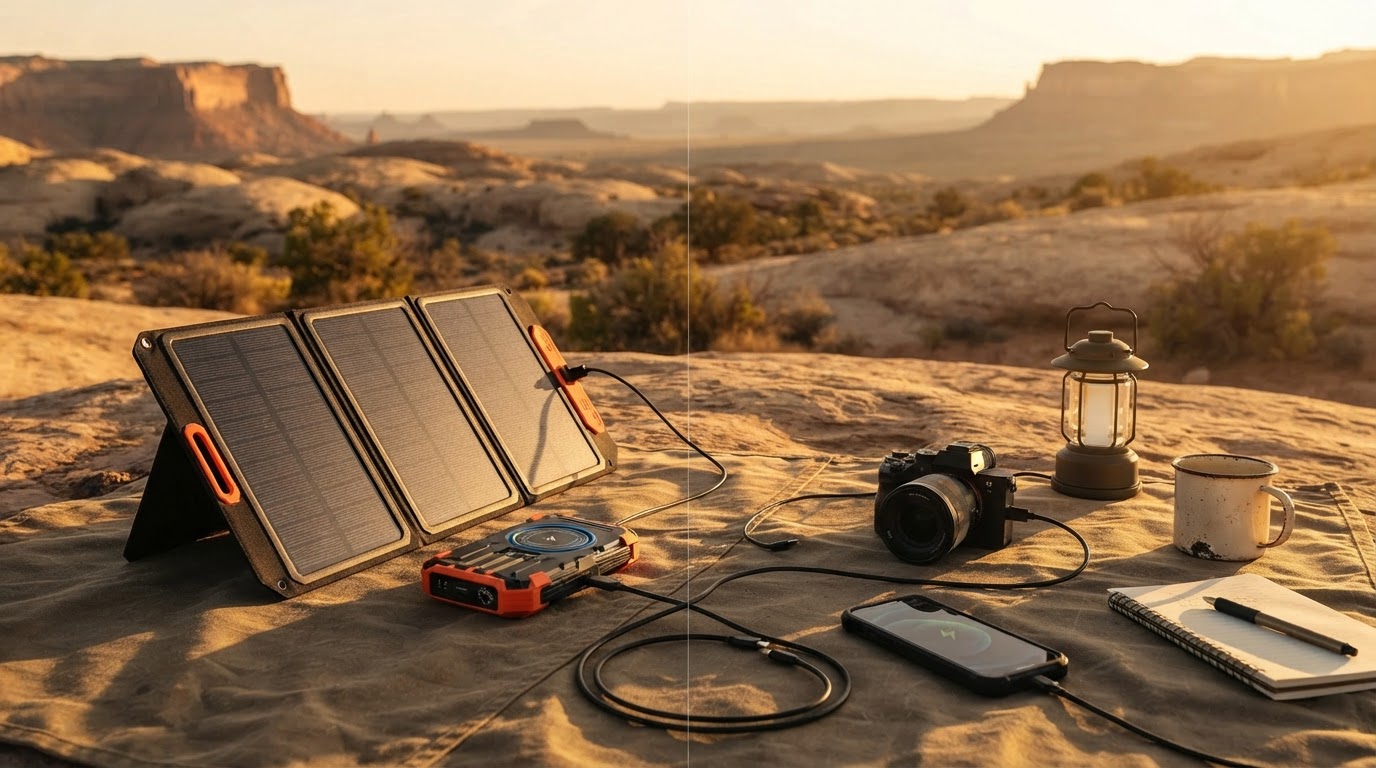
Field Testing the Solar Charge Kit for Basecamping
 Daniel OkaforField Tester
September 9, 2026 — The shift toward high-capacity off-grid power has accelerated as more campers move away from noisy gas generators in favor of a silent Solar Charge Kit.
I recently spent a week in the high desert evaluating how different configurations handle the dust and shifting light of a stationary camp. According to the Treeline Review, the Goal Zero Nomad 50 is currently a standout for basecamping because it balances a 50W output with a foldable 6-pound frame, making it manageable for those who aren't counting every ounce in a backpack. While smaller panels are fine for a quick phone top-off, I found that sustained basecamp needs—like running a fridge or charging multiple camera batteries—require the larger footprint of a dedicated kit.
The Three Stability Factors
I tested this for seven days straight, and day three is where I noticed the real difference between a casual charger and a robust Solar Charge Kit. The first factor is surface area versus efficiency; while a 50W panel like the Nomad 50 offers a USB output of 5V up to 2.4A, you really see the benefit when using the 8mm solar port which pushes up to 3.5A. The second factor is the physical connection. In high winds, lightweight panels tend to flip, but the 6-pound weight of the larger folding kits provided enough ballast to stay angled toward the sun. What surprised me: the integrated kickstands on these mid-range kits are often the first point of failure, yet they are essential for maintaining the 90-degree angle needed for peak intake. Finally, the port protection matters. Fine grit is the enemy of electronics, and kits with recessed ports or rubber gaskets, similar to the IP-rated designs seen in specialized portable solar panel battery charger units, survived the afternoon dust storms without losing connectivity. If I were setting up a long-term site again, I would prioritize a solar charge kit for camping that includes a dedicated charge controller to prevent overcharging during those long, cloudless afternoons.
Expert tip: When using a high-output 50W or 100W panel, always check the 8mm output specs rather than just the USB ports, as the 8mm connection allows you to bypass the slower 5V conversion and feed power directly into a portable solar power station for camping at much higher voltages.
Properly optimizing your solar charge kit for off-grid camping means understanding these hardware limits before you lose daylight. Here's the moment it earned its place: when the clouds broke at 4 PM and I still pulled 30 watts of consistent power to finish a laptop charge that would have failed on a smaller 10W or 20W trekking panel. What I'd do differently next time is bring a longer extension cable to keep the battery in the shade while the panel sits in the direct heat.
Sources

Photo by freestocks.org on Pexels
- Portable Solar Chargers for Backpacking - Voltaic Systems
- RV & Camping Kits – RICH SOLAR
- Best Portable Solar Panels of 2026 (Field-Tested) - Treeline Review