Portable Solar Chargers vs Traditional Power Banks for Camping
Comparing Off-Grid Power Source Options
Selecting power solutions for remote trips often comes down to standard indoor power banks versus ruggedized solar power chargers. For a comprehensive overview of trail energy planning, consult the main guide.
While standard power banks are lightweight and sufficient for urban travel, they lack the rugged protection and infinite ambient power capture required for sustained outdoor excursions.
Durability and Environmental Protection
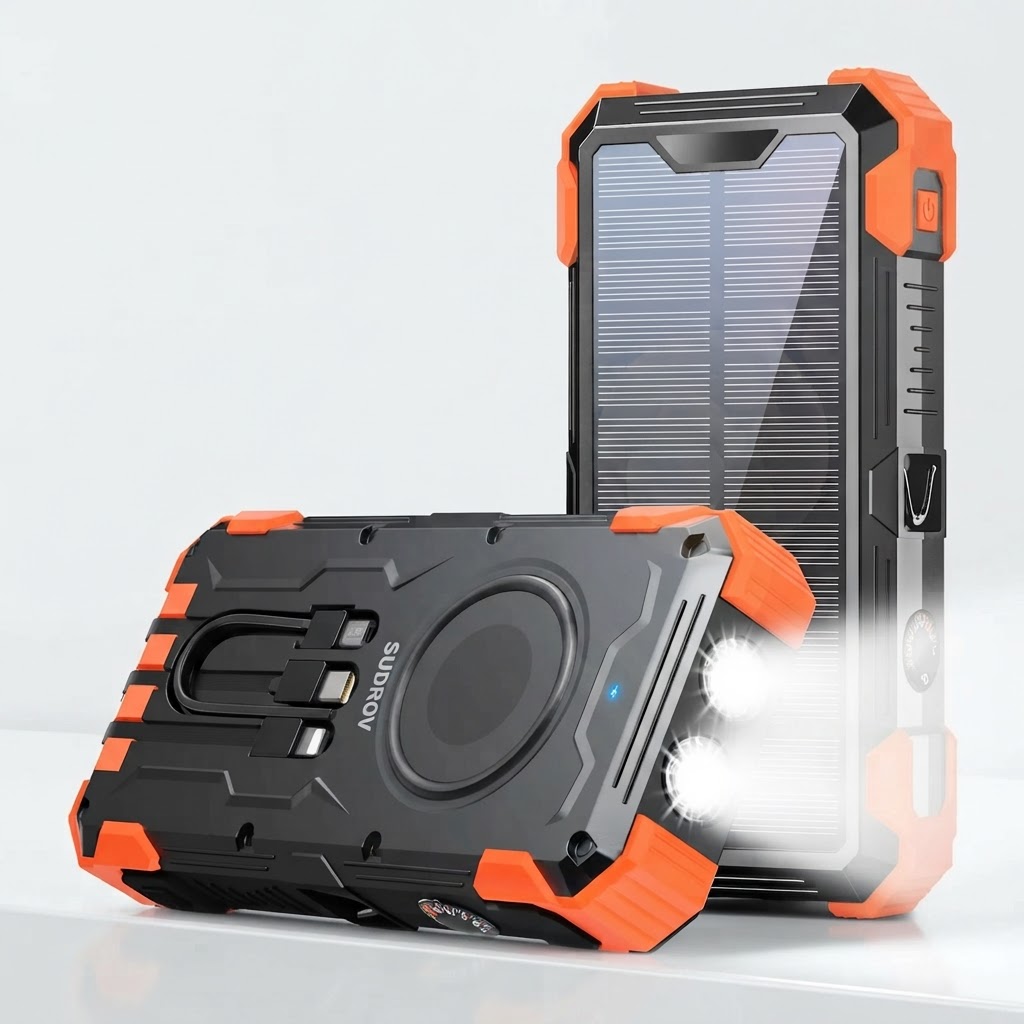
Traditional power banks feature smooth plastic enclosures vulnerable to rain, drops, and dirt. In contrast, outdoor-specific solar units feature a waterproof, shockproof, and dust-proof design engineered to withstand drop impacts and sudden rainstorms.
Additionally, outdoor solar units operate reliably across an operating temperature range of -10°C to 45°C (14°F to 113°F), whereas standard consumer electronics frequently overheat or shut down in high ambient heat.
Charging Flexibility and Output Ports
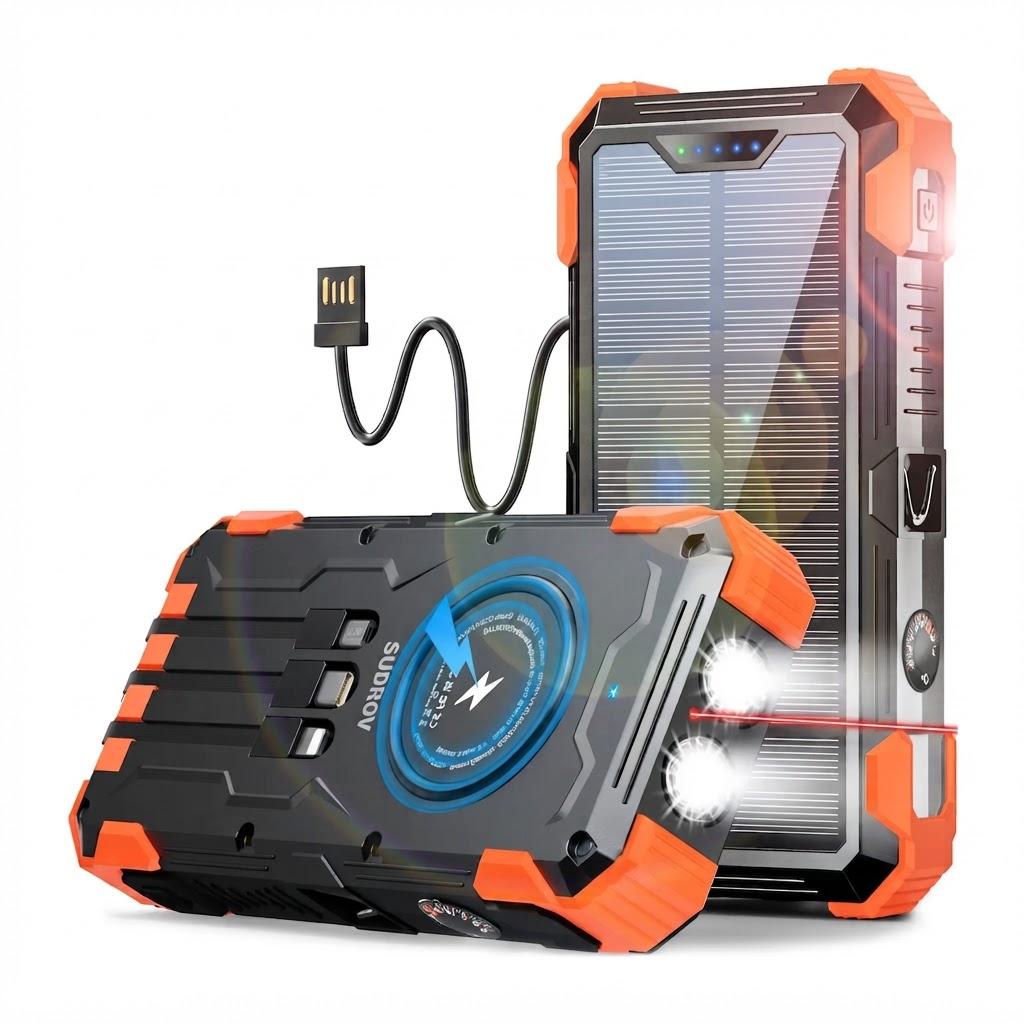
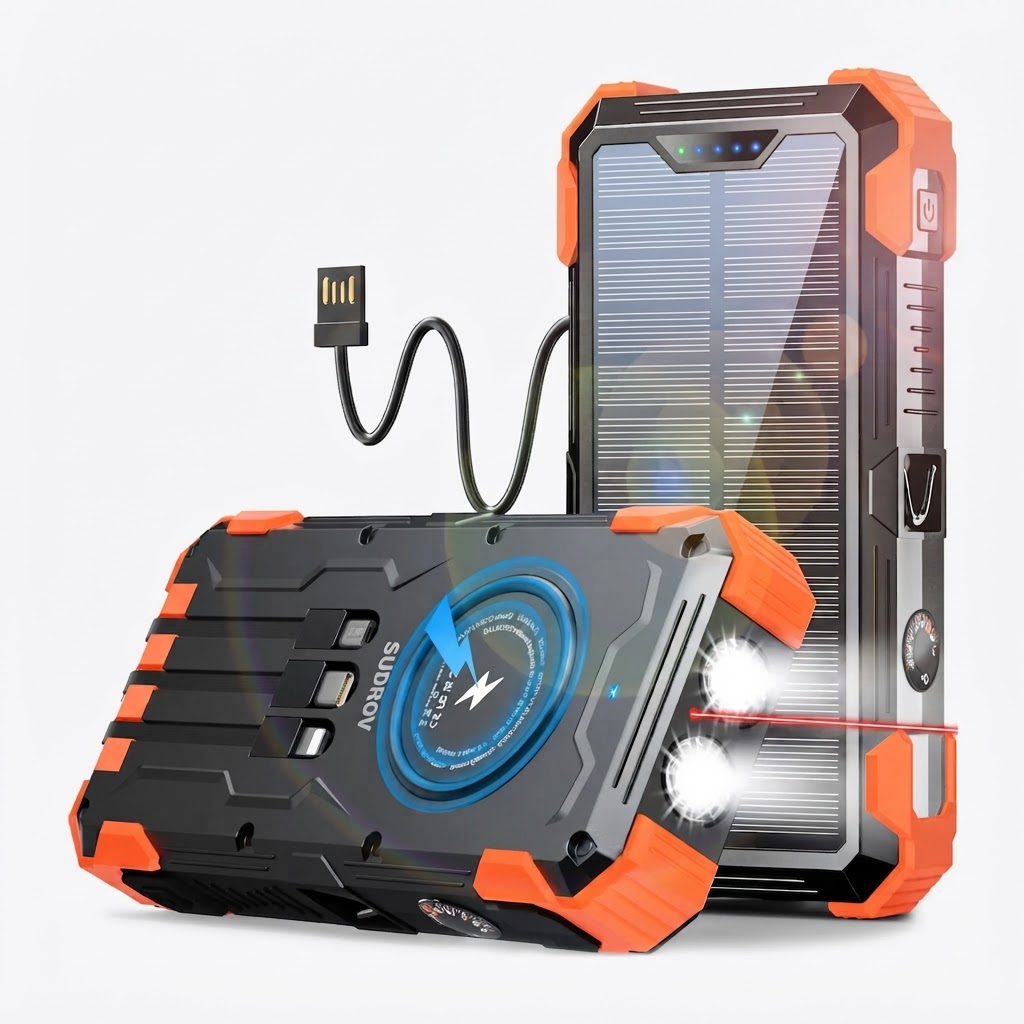
Standard power banks usually offer 1 or 2 output ports and require carrying external cords. Advanced solar camping banks feature built-in 4 charging cables (iOS, USB-C, Micro USB), wireless charging capability, and output arrangements that support charging 7 devices simultaneously with 5V/3A high-speed charging.
Final Verdict for Outdoor Enthusiasts
While traditional power banks work well for short weekend motel stays, outdoor solar chargers provide superior independence, heavy-duty durability, and emergency self-reliance for wilderness backcountry adventures.
Read the full guide: The Ultimate Guide to Off-Grid Power Solutions for Camping