Solar Charge Kit Meets Rising Off-Grid Energy Demand
 Sam VasquezBuying Guide Lead
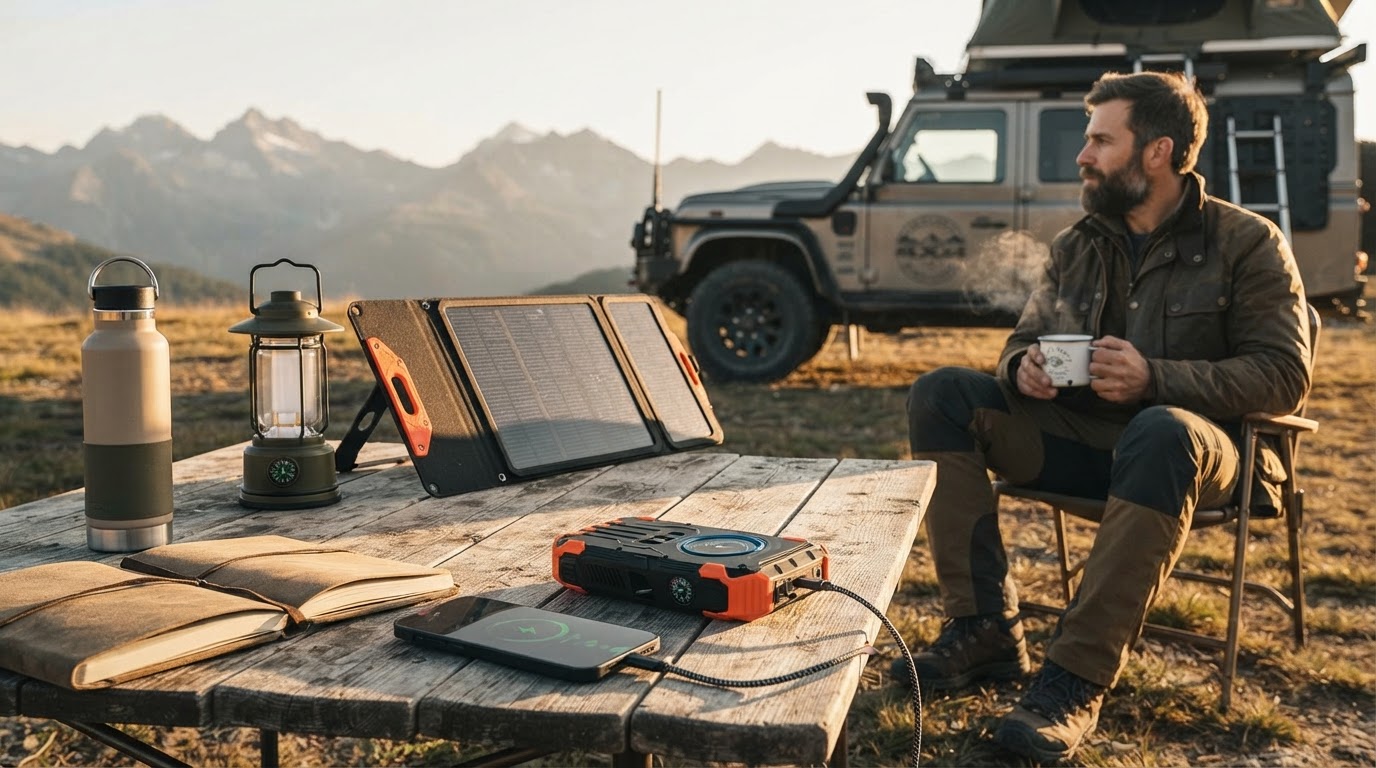
October 14, 2026 — Growing concerns regarding grid reliability have led to a surge in demand for portable photovoltaic solutions among outdoor enthusiasts and emergency preppers. Recent reports indicate that self-sufficient energy tools are now considered as vital as food and water for long-term survival scenarios. The Solar Charge Kit 42800 mAh power bank has emerged as a primary option for those needing to maintain communication and navigation tools during extended outages.
According to Naturalnews.com, reliable off-grid energy is becoming increasingly critical as the national power grid faces threats from severe storms and potential cyberattacks. The same source notes that solar chargers are uniquely effective because they are simple and self-sufficient, using photovoltaic cells to capture sunlight without the need for fuel or external infrastructure. When you are looking at gear for a bug-out bag, you have to decide between raw capacity and portability.

Photo by Jean-Daniel Francoeur on Pexels
I have spent a lot of time testing these units. If you are comparing options, you generally see the Solar Charge Kit, the Goal Zero Guide 12, and the Anker PowerCore Solar. The Goal Zero is great for AA battery users, and the Anker is slim, but the Solar Charge Kit is what I’d actually buy for a family kit. It handles seven devices at once and includes built-in cables. If you're on a budget, the Anker is cheaper but lacks the 42800 mAh capacity needed for a week-long outage. Skip this if you only need to charge a single phone once; a smaller 10,000 mAh pocket bank is lighter for day hikes.
Expert tip: Do not rely solely on the solar panel for a 0-to-100% charge in one afternoon. These small panels are designed for emergency trickles. Always wall-charge the 42800 mAh Li-polymer battery before leaving home, then use the sun to top off what you use during the day to ensure you maintain a buffer.
Between these two—the heavy-duty multi-device banks and the slim pocket chargers—I’d go with the higher capacity every time. You can learn more about managing portable power, emergency battery maintenance, solar charging efficiency, and essential prepper electronics to round out your kit. The waterproof and shockproof build of this specific unit makes it a practical choice for the rainy conditions often associated with grid-failing storms.
Choosing the right gear is about matching specs to your actual needs, not buying the flashiest box. Having a high-capacity reservoir like this ensures your flashlight and GPS stay running when the lights go out.