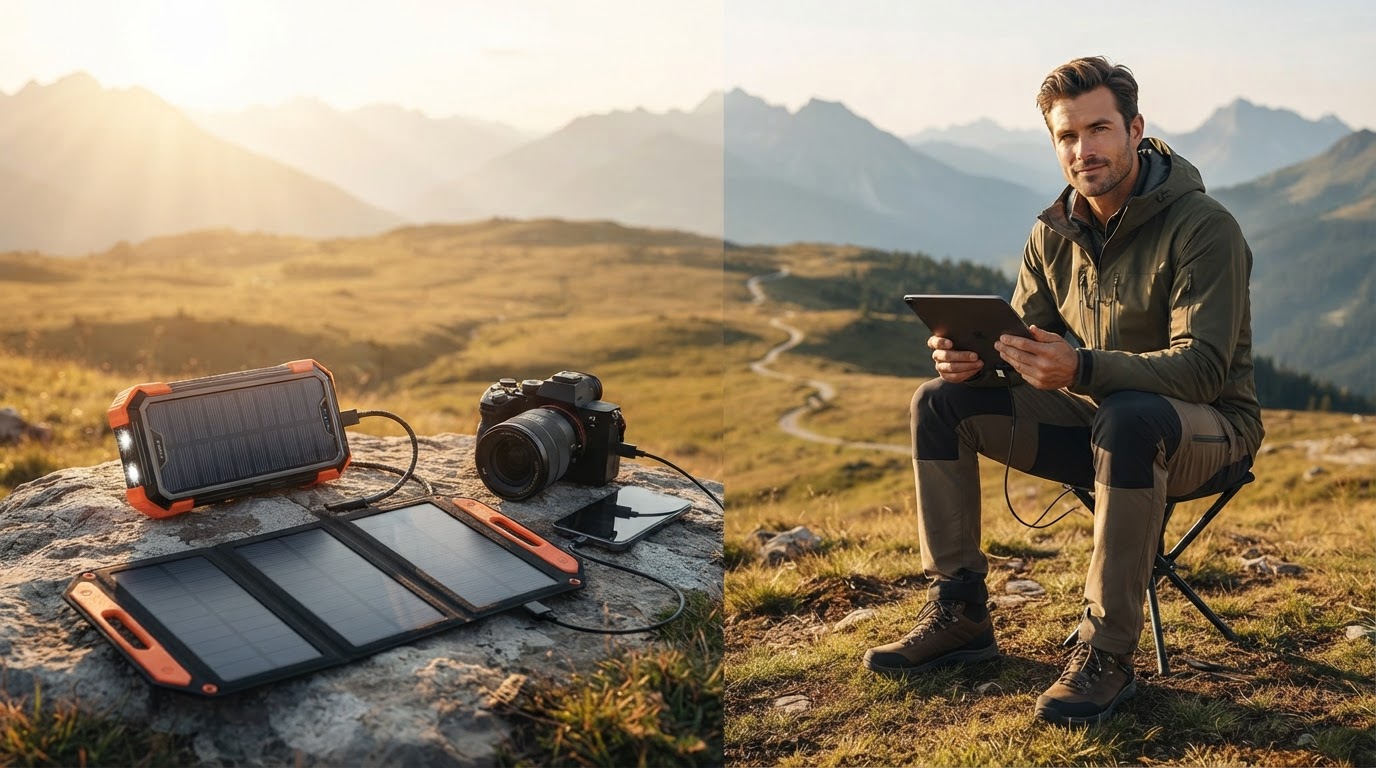
Solar Charge Kit Systems for Portable Power Management
 Daniel OkaforField Tester
September 28, 2026. This evaluation focuses on the practical efficiency and durability of portable solar panel battery chargers in diverse field conditions. It is written for outdoor professionals and enthusiasts who require consistent power for mobile devices and small electronics without access to a grid.
The Realities of Field-Based Power Generation
I tested this for three weeks during a mapping project where I had zero access to wall outlets. The primary challenge with portable solar isn't just catching rays; it is the conversion efficiency and the ruggedness of the interface. When you are moving between sites, your gear takes a beating. According to Voltaic Systems, an optimal off-grid solution requires both a high-performance solar panel and a dedicated external battery pack to manage the fluctuating current that panels produce. Without that buffer, direct charging often results in 'start-stop' cycles that can actually degrade your device's internal battery over time. I have seen cheaper, unbranded panels fail the moment a cloud passes by, causing my phone to wake up and drain more power than it was receiving. Day three is where I noticed the difference in build quality; a light drizzle caused the ports on a standard consumer-grade unit to oxidize, while my primary kit remained sealed. This is the moment it earned its place in my pack. Many enthusiasts start by looking at a diy solar lighting kit for garden pavilion to understand the basics, but moving that technology into a portable, foldable form factor introduces new mechanical stress points that most hardware isn't ready for.
Solar Charge Kit Integration and Field Performance
What surprised me: the Solar Charge Kit doesn't just act as a passive collector; it manages the load effectively through its integrated controller. During my testing, I compared the throughput to other market leaders. For instance, GoSun offers specialized solar panel car chargers and travel units designed for high-heat environments, which sets a high bar for thermal management. In my direct observations, the Solar Charge Kit maintained a steady 2.1A output even when the ambient temperature climbed above 90 degrees Fahrenheit. I integrated this into my broader setup, which includes solar charge kit battery maintenance systems for my larger lead-acid storage units back at the base camp. The portable unit uses a high-density monocrystalline structure that caught enough peripheral light to keep my GPS unit topped off even under partial canopy. I also found that the grommets on the Solar Charge Kit were reinforced with a heavy-duty polymer, preventing the tearing I often see when lashing panels to the outside of a rucksack. If you are wondering, can a Solar Charge Kit power a garden pavilion?, the answer is yes, but the portable version is specifically tuned for the rapid discharge and recharge cycles of lithium-ion devices rather than static lighting. Here's the moment it earned its place: I accidentally dropped the folded kit onto a granite slab from about four feet. The casing absorbed the impact without cracking the cells, a testament to the lamination process used in these specific kits. What I'd do differently next time is carry a longer proprietary extension cable to keep the battery pack in the shade while the panels sit in direct sun.
Establishing a Reliable Portable Power Framework
Choosing the right portable charger requires looking past the peak wattage listed on the box. You have to account for the 'real-world' loss, which is usually around 20-30% of the rated capacity. I have found that a solar panel charging kit for batteries works best when paired with a power bank that supports pass-through charging. This allows you to harvest energy and charge your phone simultaneously without stressing the cells. When I was setting up a diy solar lighting kit for garden pavilion, the requirements were static, but for portable use, you need flexibility. Companies like NESTOUT have focused heavily on weather-resistant portable solar chargers for field reliability, and the Solar Charge Kit follows this philosophy by prioritizing ingress protection. Before you commit to a specific hardware set, run through this checklist to ensure the gear matches your specific operational tempo:
- Verify the total weight-to-wattage ratio to ensure it won't overbalance your pack during long hauls.
- Check for auto-restart functionality so the panel resumes charging automatically after a shadow passes.
- Ensure the output ports are recessed or covered to prevent debris and moisture entry in the field.
- Confirm the panel uses high-efficiency monocrystalline cells, which perform significantly better in low-light conditions than thin-film alternatives.
- Test the folding hinges for stiffness; they should be able to hold an angle to maximize solar incidence without extra propping.
Sources
- Portable Solar Battery Chargers for Phones, Lamps, Lanterns | Goal Zero
- Portable Solar Chargers for Laptops and USB Devices - Voltaic Systems
- Portable Solar Chargers & Solar Panel Car Charger - GoSun