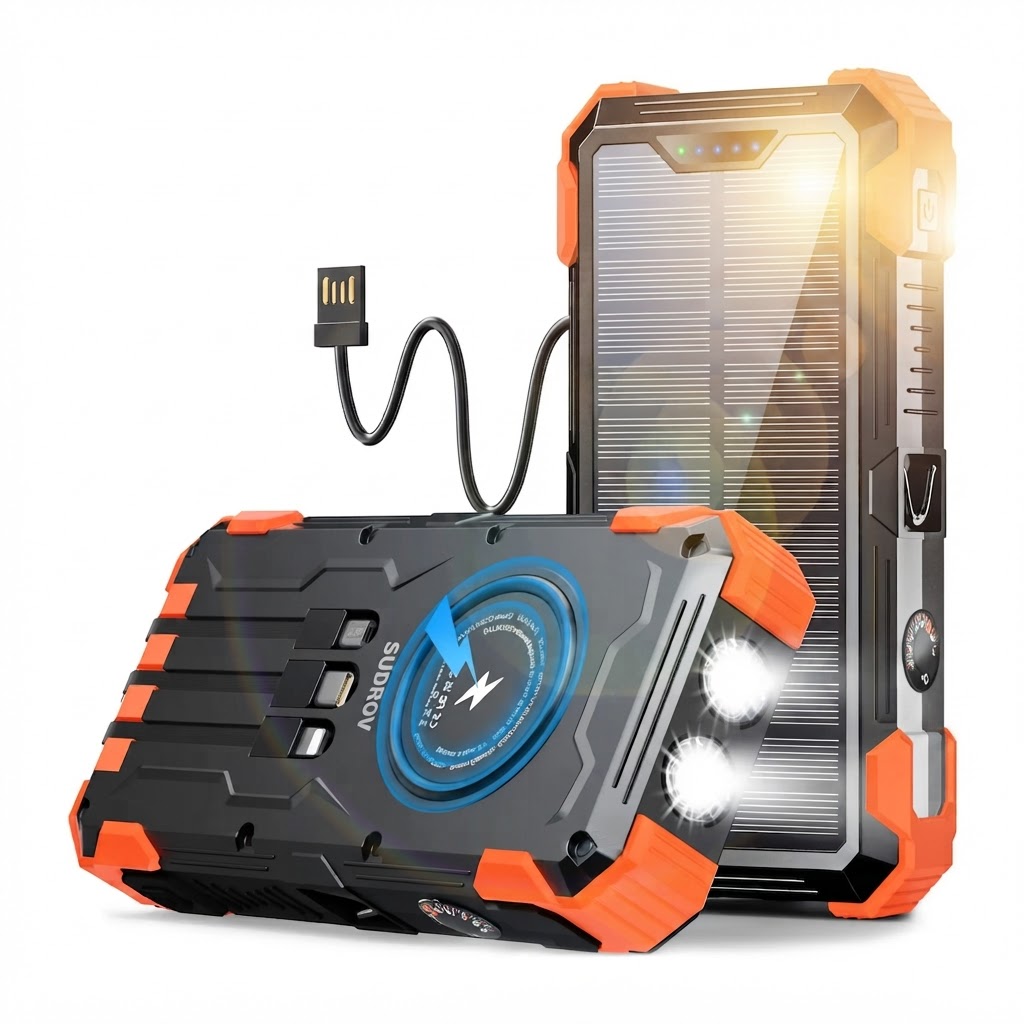
Solar Power Banks vs Wall Outlets: Off-Grid Charging Efficiency
Understanding Power Input Channels for Camping
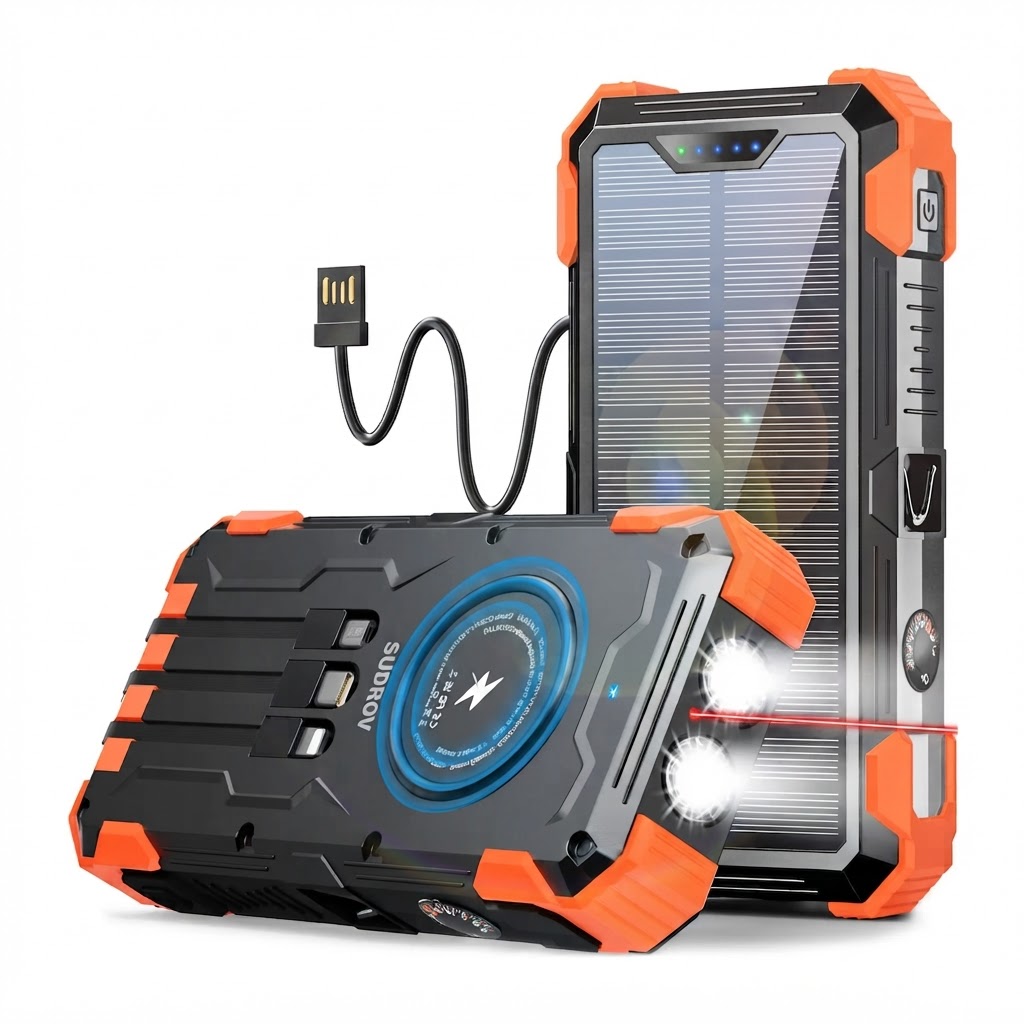
When preparing electronics for backcountry trips, campers must understand the operational differences between grid-based wall charging and solar energy harvesting. For a foundational overview of campsite energy setups, read the main guide.
Modern outdoor battery packs offer 3 input options (Solar, USB-C, iOS), allowing users to switch between high-speed home grid prep and emergency field power generation.
AC Wall Outlet Charging Efficiency
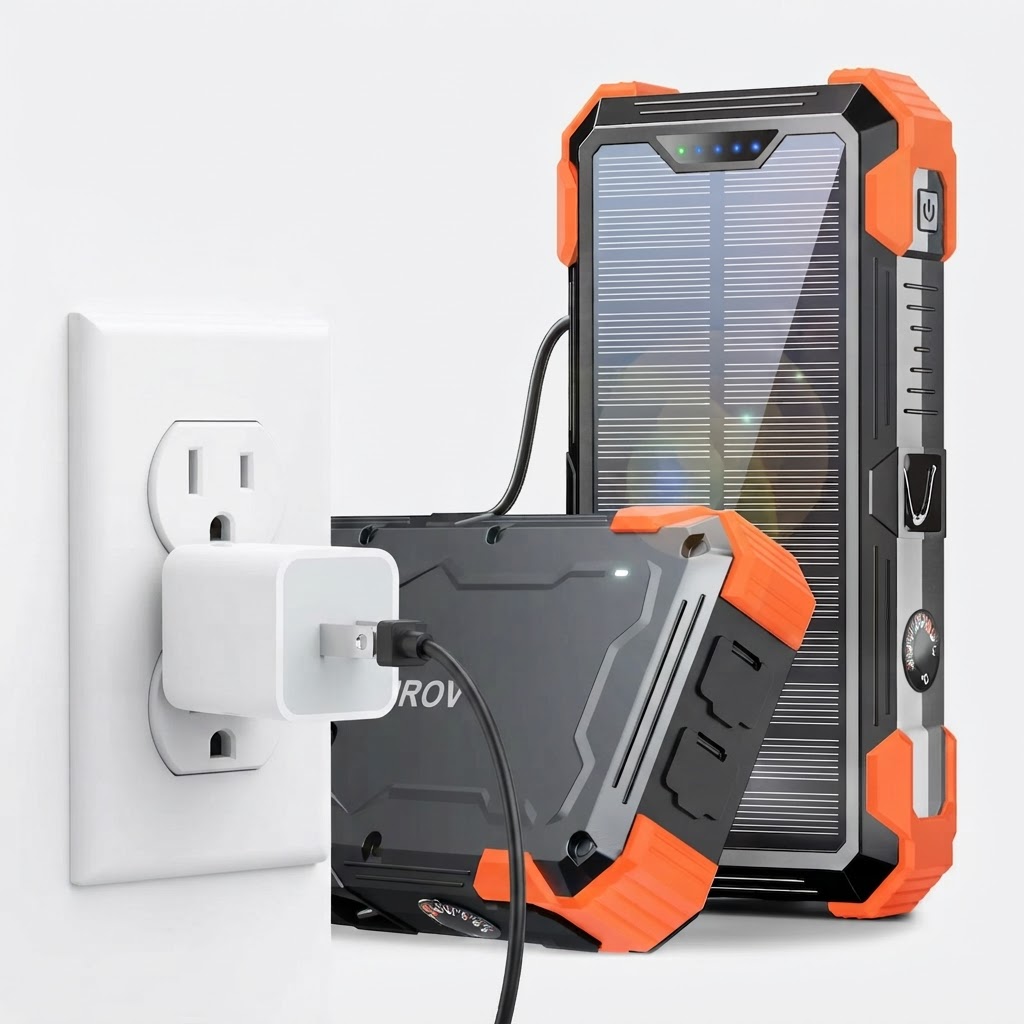
Plugging a high-capacity unit into an AC wall outlet delivers consistent high amperage. An 8-12 hours wall charge cycle fills a heavy-duty 42800 mAh premium Li-polymer battery completely. This creates a dense energy storage base ready to deliver 15 Watts Fast Charging to phones and equipment once off the grid.
Solar Panel Recharging Expectations and Limitations
In contrast, integrated solar panels on portable power banks are designed primarily for emergency topping-up rather than full battery cycles. Because direct solar collection surface area is small, solar full charge hours range from 80-100 hours depending on cloud cover and solar angle.
Solar energy serves best as an environmental safety net. When camping off-grid for extended periods, exposure to sunlight prevents passive self-discharge and steadily adds reserve power to keep critical communication devices operative.
Hybrid Charging Strategy for Wilderness Success
Combining both input channels yields the best results. Fully charge your battery pack at home using AC power, then attach the unit to your backpack using a carabiner during hikes to continuously absorb sunlight while exploring.
Read the full guide: The Ultimate Guide to Off-Grid Power Solutions for Camping