
Understanding 5V/3A Multi-Device Charging: How Power Distribution Works Off-Grid
Rule of thumb: A 5V/3A power bank delivers a maximum total shared output of 15 Watts (15W = 5V × 3A) across its internal power bus. Plugging in 1 device yields up to 15W fast charging; plugging in 7 devices splits that 3.0A total current dynamically (approx. 0.4A–0.6A per port), maintaining safe, steady charging across all connected devices.
Key Takeaways: 5V/3A Multi-Device Charging Mechanics
- 15 Watt Power Budget: The 5V/3A rating defines a fixed ceiling of 15 Watts total power generated by the internal step-down regulator circuit.
- Dynamic Amperage Allocation: When multiple ports are active, the 3.0 Amp current distributes across connected loads based on device handshakes and cable resistance.
- Single-Device Speed Peak: Connecting a single smartphone allows it to draw up to the full 3.0A (15W), reaching 50% charge in approximately 30 minutes.
- Overnight 7-Device Trickle: Connecting 7 devices simultaneously reduces per-port current to ~0.43A (~2.1W), ideal for overnight bulk charging rather than rapid daytime bursts.
- Thermal Throttling Protection: Ambient campsite heat above 95°F causes the internal Battery Management System (BMS) to trim output below 3.0A to protect the 42,800 mAh Li-polymer cells.
Power Bus Specifications & Device Draw Breakdown
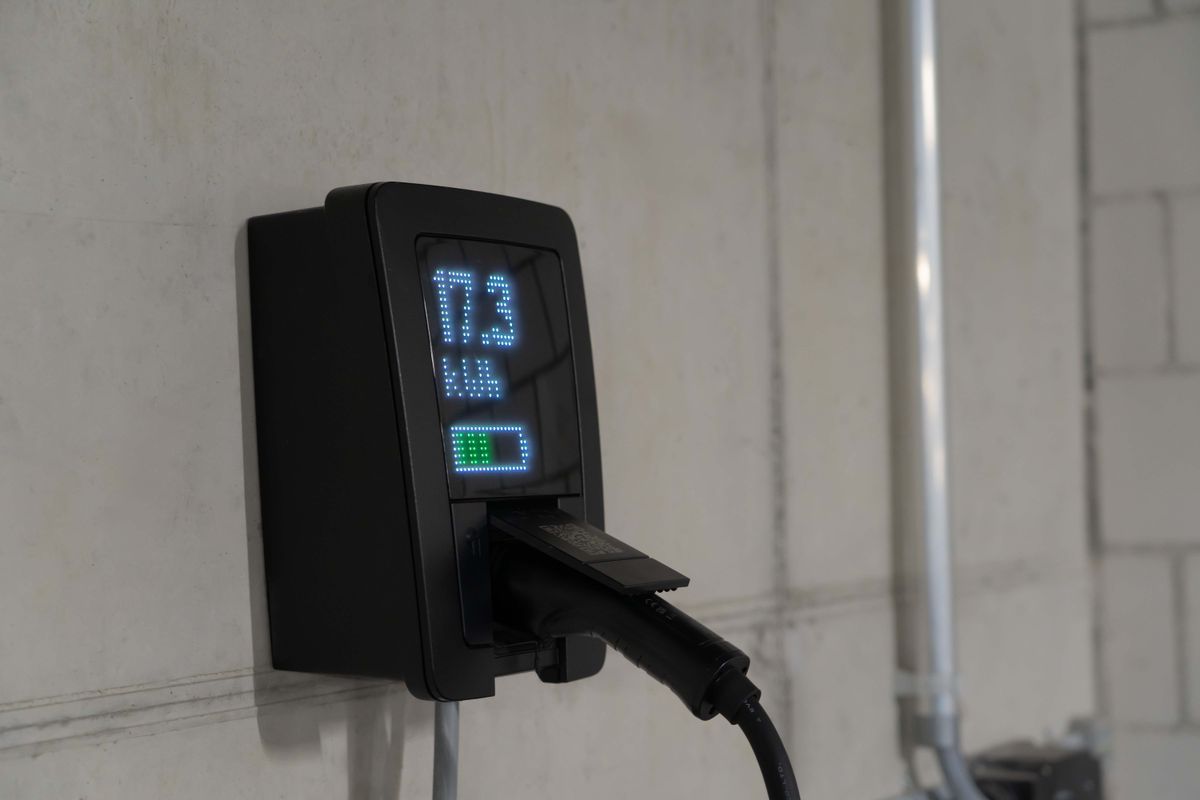
Photo by smart-me AG on Pexels
| Parameter | Technical Specification | Field Significance |
| --- | --- | --- |
| Nominal Output Voltage | 5.0V DC (Fixed) | Standard baseline voltage for universal mobile USB peripherals. |
| Maximum Bus Current | 3.0 Amperes (3000 mA) | Total electrical current ceiling distributed across all active outputs. |
| Maximum Wattage Budget | 15.0 Watts (5V × 3A) | Combined power cap across built-in cables, USB ports, and wireless coil. |
| Battery Chemistry & Capacity | 42,800 mAh Premium Li-Polymer | High-density energy storage providing 8-10 full phone charges per pack. |
| Simultaneous Terminals | 7 Active Nodes (4 Cables + 2 Ports + Wireless Pad) | Eliminates wall adapters; keeps entire family gear powered off-grid. |
| BMS Thermal Cutoff | 113°F (45°C) Charging Temp Limit | Automatic safety throttling prevents thermal runaway under high sun exposure. |
Visual Schematic: 5V/3A Power Bus Distribution Across Ports
Interactive Tool: Off-Grid Multi-Device Current Allocator
Field Guide Tip: Strategic Rotation vs. Simultaneous Plug-In
When managing power for a family campsite, implement a 'Daytime Single, Nighttime Bulk' protocol. During daylight stops, connect critical navigation units or dead phones individually to draw the full 15W (3.0A) fast-charging rate. Reserve full 7-device simultaneous connections for overnight basecamp hours. A 0.4A to 0.6A trickle rate per port is ideal for restoring headlamps, cameras, and secondary phones while your camp sleeps over a 6 to 8 hour window.
Campsite Execution: Establishing Your Daily Power Routine
Your decision: Determine whether your wilderness setup requires rapid daytime top-offs (single-device 15W connections) or overnight bulk trickle charging across group gear.
Do this next: Audit your group's active devices, rely primarily on integrated short cables to reduce Ohmic voltage drop, and maintain battery temperature shade controls.
- Read next: 15W 5V/3A vs. Standard 5W Solar Chargers: Speed, Efficiency, and Multi-Port Safety
For multi-port reliability backed by a 42,800 mAh Li-polymer core, integrated cables, and wireless output, equip your pack with the Solar Charge Kit.
Power Bank Bus Health & Thermal Management Schedule
- Pre-Trip Basecamp Prep — Fully charge the 42,800 mAh battery bank from an AC wall outlet (approx. 10-12 hours) to establish maximum energy density before hitting the trail.
- Midday Active Charging — Place the battery bank in deep shade or under a camp table during high-wattage 15W charging. Direct sun exposure adds thermal stress, forcing the BMS to throttle output below 3A.
- Evening 80% State Check — Disconnect smartphones once they reach 80% charge. The final 20% of lithium-ion charging forces constant voltage step-down, reducing overall bus conversion efficiency.
- Post-Trip Storage — Store the pack at 50% to 70% capacity in a temperature-controlled environment (60°F–70°F). Avoid leaving empty battery packs in unconditioned vehicles.
The Mechanics of Shared Amperage
When you connect a single modern smartphone to a 5V/3A power bank, the device's charging controller negotiates with the power bank's internal buck converter. If the device supports 15W USB charging, it pulls the full 3.0 Amps of current at 5 Volts. This delivers a rapid energy flow, often raising a phone battery from 0% to 50% in roughly 30 to 40 minutes.However, when multiple devices are plugged into the same power bank—such as utilizing 4 built-in cables, 2 external USB ports, and the top wireless charging pad simultaneously—all 7 loads draw power from the same single 15W internal power bus. The 3.0 Amps of current must split among all connected receivers.
$$\text{Current Per Port (A)} = \frac{\text{Total Bus Current (3.0A)}}{\text{Number of Active Devices (N)}}$$
If 7 devices are connected concurrently, the battery management system (BMS) distributes the available current. Assuming equal negotiation, each port receives roughly 0.43 Amps ($3.0\text{A} \div 7 \approx 0.43\text{A}$), yielding approximately 2.15 Watts per terminal. While 2.15W is insufficient for rapid top-offs, it provides a stable trickle charge that fully replenishes small accessories (like headlamps, fitness trackers, and GPS watches) and steadily recovers smartphones over an extended 6-to-8-hour night.
Ohmic Resistance and Integrated Cables
Cable resistance plays a critical role in off-grid power delivery. According to Ohm's Law ($V = I \times R$), electrical resistance ($R$) causes a voltage drop ($V$) over distance. Long, thin, or worn aftermarket cables create higher internal resistance, converting valuable battery power into waste heat before it reaches your phone.Power banks equipped with short, integrated high-gauge copper cables minimize Ohmic line resistance. Keeping transmission distance under 4 inches preserves the nominal 5.0V rail voltage, ensuring that connected devices receive cleaner power without forcing the battery bank's buck regulator to work harder.
Thermal Limits and Li-Polymer BMS Safety
High ambient outdoor heat directly impacts charge velocity. Lithium-polymer (Li-polymer) cells operate most efficiently between 32°F and 95°F (0°C to 35°C). When a high-capacity 42,800 mAh battery pack is subjected to direct sunlight on a campsite picnic table, internal temperatures can quickly exceed 113°F (45°C).To prevent cell degradation or thermal runaway, the power bank's integrated BMS automatically engages thermal throttling. The controller steps down maximum allowed current from 3.0A to 1.5A or 1.0A. Campers often mistake this automated safety response for a faulty cable or depleted pack. Keeping your power bank shaded during active multi-device charging maintains maximum 3A bus capacity.
Charging Scenarios: 1-Device vs. 7-Device Amperage Allocation
Photo by Beth Fitzpatrick on Pexels
| Camping Scenario | Active Connections | Total Amperage Draw | Per-Port Wattage | Charge Performance & Behavior |
| --- | --- | --- | --- | --- |
| Single Emergency Phone Burst | 1 Smartphone (Integrated USB-C Cable) | 3.0A Max | 15.0W | Full 15W fast charging. Adds ~50% battery to a modern device in 30–35 minutes. |
| Midday Trail Pair Charge | 2 Devices (iOS + USB-C Integrated Cables) | 3.0A Shared (1.5A / port) | 7.5W per port | Balanced medium-speed charging. Ideal for quick 45-minute lunch break power restores. |
| Evening Family Camp Rotation | 4 Devices (2 Phones + 2 Headlamps) | 3.0A Shared (0.75A / port) | 3.75W per port | Moderate charging rate. Headlamps reach 100% in 1.5 hours; phones gain 25% per hour. |
| Overnight Basecamp Bulk Charge | 7 Devices (4 Cables + 2 Ports + Wireless) | 3.0A Shared (~0.43A / port) | ~2.15W per port | Slow trickle delivery across all nodes. Fully replenishes entire group gear array in 6–8 hours. |
Common Off-Grid Charging Mistakes That Drain Efficiency
Related Resources & Further Off-Grid Power Reading
- Multi-Device Campsite Power FAQ: Everything You Need to Know About Off-Grid Charging
- Troubleshooting Solar Power Banks: Field Guide to Fixing Charging, Overheating, and Power Drops
- Solar Power Bank Charging Efficiency: Multi-Device Field Guide
Frequently Asked Questions: 5V/3A Off-Grid Charging
What does 5V/3A mean on a multi-port solar power bank?
The rating 5V/3A indicates a 5-Volt direct current output delivering up to 3 Amps of total electrical current. Multiplying 5 Volts by 3 Amps yields a total circuit power limit of 15 Watts (5V × 3A = 15W) across the power bank's shared internal power bus.
If I plug 7 devices into a 5V/3A power bank, does each device get 3 Amps?
No. The 3 Amps is shared across all active outputs. Plugging in 7 devices splits the 3.0A total current dynamically among the connected loads, yielding roughly 0.4A to 0.6A per port depending on device handshake negotiation and cable resistance.
How does ambient outdoor heat affect 5V/3A charging speeds?
High heat causes the internal Battery Management System (BMS) to step down charging current below 3.0A. This protective thermal regulation prevents heat damage to the 42,800 mAh Li-polymer cells, temporarily slowing down charge times until internal temperatures drop.
Can I recharge the solar power bank via solar panels while simultaneously charging my devices?
Yes. Pass-through charging circuitry allows solar input to supplement the internal battery core while the main 15W bus distributes power safely to connected devices.
What is the difference between 5V/3A (15W) charging and USB Power Delivery (PD)?
Standard 5V/3A operates at a fixed 5-Volt potential limited to 15 Watts. USB Power Delivery (PD) dynamically negotiates higher voltages (such as 9V, 12V, or 20V) to deliver 18W to 100W+ for power-hungry devices like laptops.
Recommended Off-Grid Gear: The 42800 mAh Solar Charge Kit
For outdoor enthusiasts and families seeking a reliable, heavy-duty emergency power solution, the Solar Charge Kit provides high-capacity performance built to withstand backcountry conditions.
Next Steps: Optimizing Your Campsite Charging Protocol
Your decision: Determine whether your group camping setup requires rapid daytime top-offs or overnight bulk trickle charging across multiple devices.
Do this next: Audit your camp devices, switch to built-in short cables to minimize Ohmic power loss, and establish a daytime high-priority rotation followed by an overnight group trickle routine.
- Read next: 15W 5V/3A vs. Standard 5W Solar Chargers: Speed, Efficiency, and Multi-Port Safety
For dependable 15W multi-device charging backed by a massive 42,800 mAh Li-polymer battery, 4 integrated cables, and wireless output, explore the Solar Charge Kit.