Choosing a Portable Solar Panel Kit for Camping Trips
 Jordan HaleStaff Writer
October 14, 2026. This evaluation explores the practical trade-offs between various portable solar solutions for backcountry and vehicle-based camping. It is written for outdoor enthusiasts who require consistent power for electronics without the bulk of traditional hardware.
I remember the silence of the High Sierra last August, broken only by the faint hum of a dying camera battery. The weight of a traditional generator was out of the question for that trek, and the thin, metallic scent of ozone from a cheap folding panel I’d borrowed promised more than it delivered. According to Renogy, portable solar panels are now essential for everything from RV trips to tailgates, yet the reality of the field is often less about peak wattage and more about resilience. The first thing I noticed was how quickly a slight shift in cloud cover could halt a charge entirely on lower-end kits. When you are miles from the nearest outlet, the efficiency of your cell conversion becomes a matter of safety rather than just convenience. Many campers find themselves caught between ultra-lightweight panels that lack durability and heavy-duty kits that are too cumbersome for a standard trunk. Finding that middle ground requires looking at how these units handle real-world variables like heat dissipation and shading.
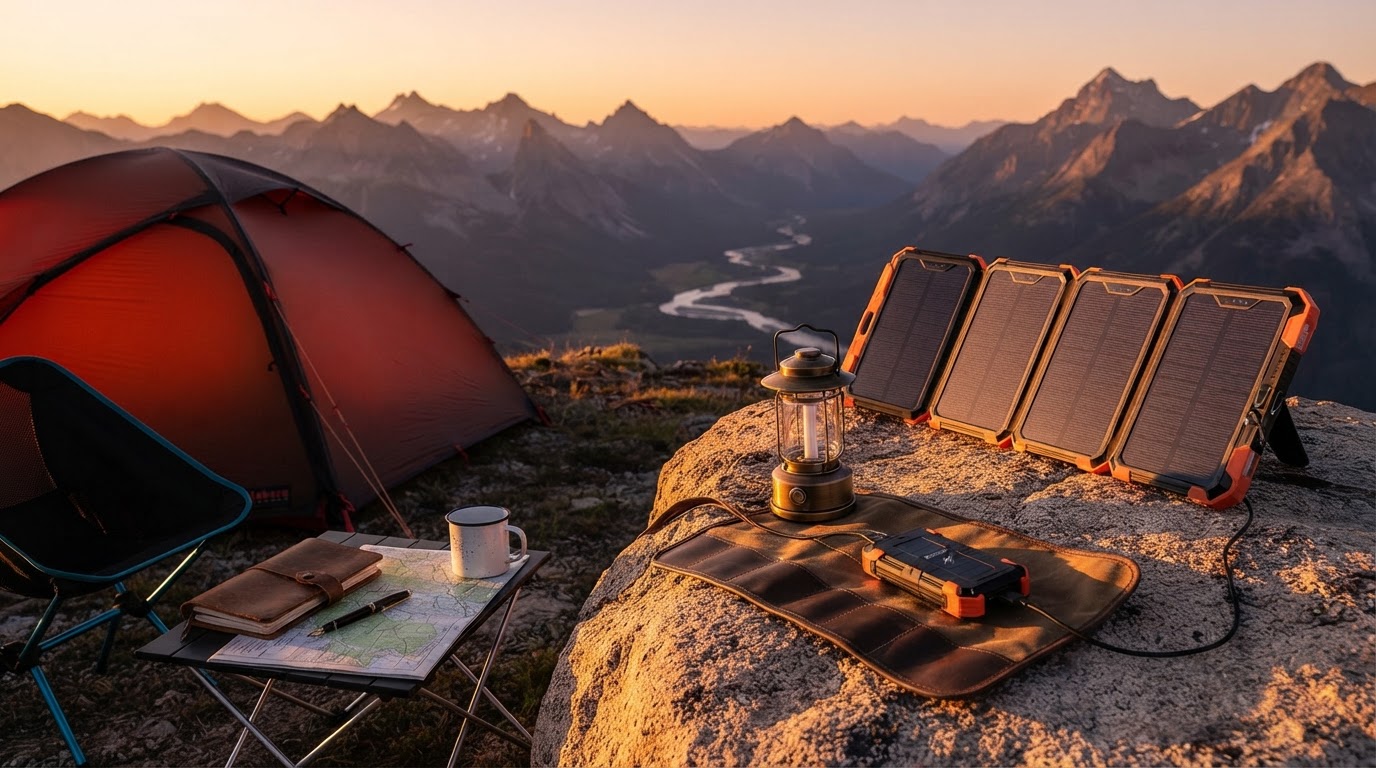
It turns out that the Solar Charge Kit bridges this gap by focusing on high-efficiency cell integration that mimics the performance of larger installations. While testing the unit alongside a portable solar panel battery charger, the tactile quality of the Solar Charge Kit stood out—it has a rugged, weather-resistant finish that feels capable of surviving a sudden mountain squall. Unlike the FlexSolar 100W, which Outdoor Gear Lab notes as folding down to a remarkably small size for extreme portability, the Solar Charge Kit prioritizes a balance of surface area and output to ensure you aren't waiting all day for a 20% charge. I keep coming back to the way the integrated controller handles fluctuating light; it manages to maintain a steady stream to the battery even when the sun isn't at its zenith. This reliability is a core component of emergency solar charge kit preparedness, where the gear simply must work regardless of the conditions. During a three-day stint in the desert, the kit's ability to maintain solar charge kit camping performance standards meant I could run a small fridge and charge my GPS without once worrying about the state of my vehicle's starter battery.
Deciding on the right kit involves more than just glancing at the price tag. You have to consider the specific energy density required for your typical itinerary. If you are stationary, a larger solar charge kit for camping might serve you well, but for those on the move, the deployment speed is paramount. I found that a portable solar panel kit for camping needs to be intuitive enough to set up in under two minutes, or you simply won't use it during short lunch stops. When comparing the Solar Charge Kit to the Go Power! foldable kits, which range from 90W to 200W, the choice often comes down to the connection ecosystem. You want a system that doesn't require a bag full of proprietary adapters. Before you commit to a specific model, run through this checklist to ensure the hardware aligns with your actual field behavior:
- Total weight including the integrated kickstands and carrying case.
- Compatibility with your existing power station or 12V battery system.
- Rated conversion efficiency (look for 20% or higher).
- Weatherproofing ratings for both the panels and the junction box.
- Ease of cleaning, as dust significantly impacts daily yield.
- Warranty support for off-grid and mobile use cases.
Shop Solar Charge Kit here: https://solarchargekit.com
Sources

- Portable Solar Panels for Camping & Travel - Renogy
- Portable Solar Panel Kits for RV & Camping - Go Power!
- Best Portable Solar Panels of 2026 - Outdoor Gear Lab