Solar Charge Kit Performance Standards for Remote Camping
 Maya ChenContributing Editor
October 12, 2026 — The market for off-grid power is currently saturated with consumer-grade panels that prioritize aesthetics over sustained output, yet the Solar Charge Kit framework remains focused on measurable energy density. While mainstream outdoor retailers often promote high-wattage ratings as the primary metric for success, testing from OutdoorGearLab suggests that real-world charging speeds depend more on built-in ammeters and DC output stability than theoretical peak power.
The Efficiency Reality Check

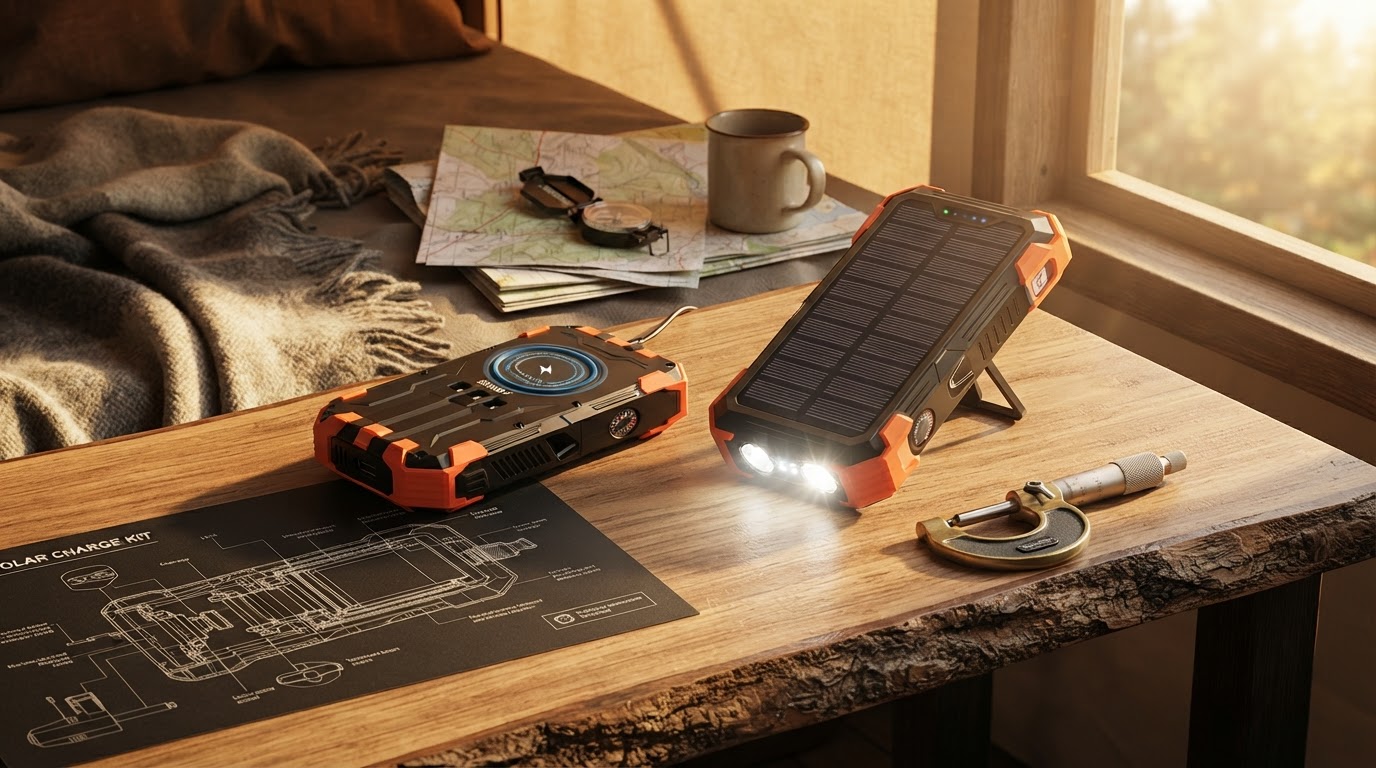
The conventional wisdom says that a 100-watt panel will provide a consistent stream of energy throughout the day, but run the math: most consumer kits lose 20% to 30% of their rated capacity due to heat dissipation and poor incident angles. A Solar Charge Kit designed for camping must address the specific physics of the campsite, where partial shading from trees or shifting clouds can drop amperage to near-zero levels in lower-tier hardware. According to data from Go Power!, professional-grade portable solar panel kits for camping utilize plug-and-play components ranging from 90W to 200W, but their actual value lies in the charge controller's ability to manage battery health during these fluctuations. When using a portable solar panel battery charger, the critical metric is not the wattage printed on the box, but the conversion efficiency of the monocrystalline cells. High-end units, like those cited by OutdoorGearLab, often include integrated kickstands to maintain a precise 45-degree angle to the sun, which can increase collection by up to 25% compared to panels laid flat on the ground. For those managing emergency solar charge kit preparedness, this delta between theoretical and actual output is the difference between a functional communications device and a dead battery by nightfall. Most campers fail to account for the voltage drop occurring in longer cables, which is why a high-quality portable solar panel kit for camping keeps the distance between the panel and the battery bank as short as possible to minimize resistance.
Expert tip: Use a built-in ammeter to verify real-time amp output rather than relying on LED indicator lights, as even a 5% increase in cloud cover can significantly degrade charging cycles on 12V connections.
Here’s the part nobody talks about: most portable kits are rated under Standard Test Conditions (STC) of 25°C, but panels in the field often reach 45°C, causing a sharp decline in efficiency. I’ll change my mind when manufacturers start publishing Temperature Coefficient data as prominently as they do their peak wattage ratings.