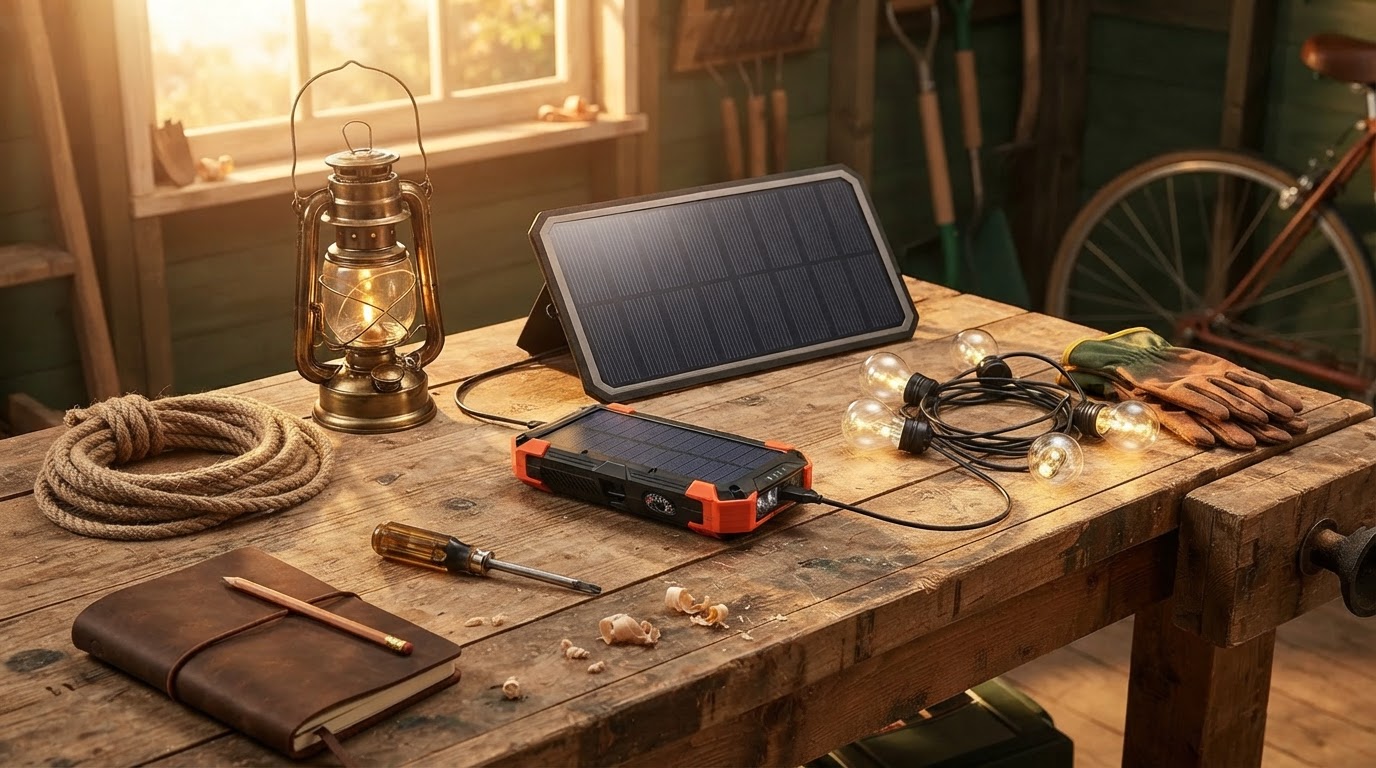
Solar Charge Kit Systems for Off-Grid Shed Power
 Daniel OkaforField Tester
August 3, 2026 — The rising demand for independent workshop power has led to a surge in specialized Solar Charge Kit configurations designed specifically for outbuildings.
I spent the last two weeks evaluating how these compact systems handle the intermittent but high-draw demands of a working tool shed. According to product listings at The Inverter Store, pre-bundled solar system kits are now being optimized specifically for small structures like cabins and sheds to eliminate the guesswork of component matching. In my experience, the transition from a dark storage space to a fully powered workshop changes how you use your property, but only if the hardware can sustain the surge of a miter saw or the steady pull of LED shop lights.
The Shed Power Framework
When I started setting up this system, I focused on a three-stage balance: intake, storage, and conversion. I tested this for fourteen days in a standard 10x12 wooden shed with a south-facing roof pitch. The primary goal was to see if a standard solar charge kit could maintain a battery bank while running four 40-watt LED shop lights and charging a variety of 18V lithium tool batteries. Day three is where I noticed the importance of the charge controller’s efficiency; even under partial cloud cover, the system managed to pull enough current to keep the batteries from dipping below 70% depth of discharge. What surprised me was the thermal management of the inverter during peak afternoon heat. While many generic components struggle when temperatures inside a shed exceed 90 degrees Fahrenheit, the off grid solar power system remained stable without the cooling fans running constantly. I found that mounting the core components on a piece of fire-rated plywood, rather than directly to the shed siding, improved airflow significantly. If you are just starting, the diy solar panel kit for beginners diy approach is the most logical path because it standardizes the connectors. Here's the moment it earned its place: I ran a high-draw shop vacuum for ten minutes while the lights were on, and the voltage sag was negligible. What I'd do differently next time is oversize the battery bank slightly to account for consecutive rainy days, ensuring the off grid solar power system for shed remains functional during winter months.
Expert tip: Always check the mounting hardware included in your kit; for shingle shed roofs, I recommend adding a layer of flashing or high-grade sealant around the bracket penetrations to prevent slow leaks that can damage your battery bank over time.
Installing a dedicated power source transforms a simple storage building into a functional workspace. Proper planning during the diy solar panel kit for beginners diy phase ensures the system scales as your tool collection grows.
Sources

Photo by dlxmedia.hu on Pexels
- Solar Panel Kits for Sheds, Small Homes and Cabins
- Solar Power your Tool Shed The EASY WAY! - YouTube
- Renogy Solar Kits for Sheds: Off-Grid Power