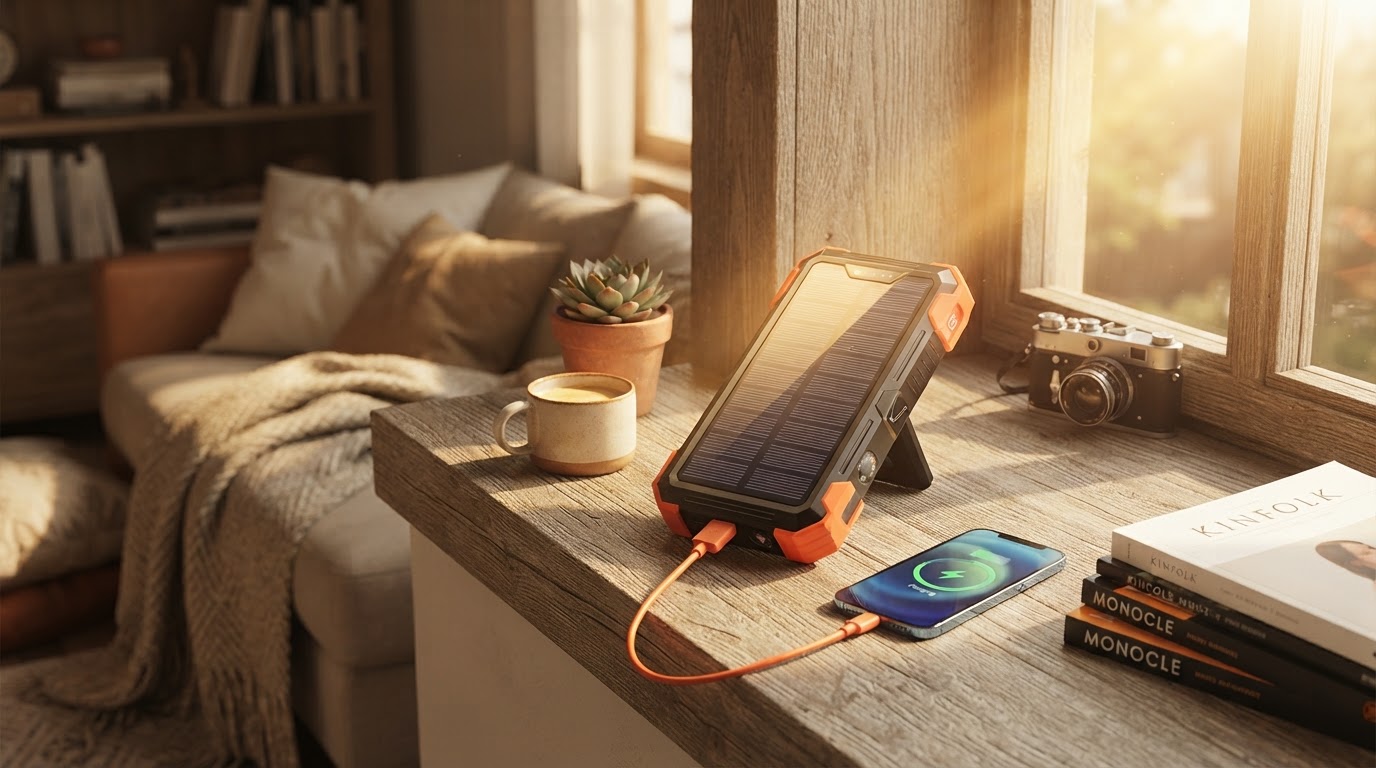
How does a portable solar panel battery charger work?
 Maya ChenContributing Editor
October 16, 2026 — A portable solar panel battery charger converts sunlight into direct current (DC) electricity using silicon-based photovoltaic cells, though its actual charging speed is strictly limited by the surface area of the panels and the efficiency of the integrated voltage regulator.
Consumers often invest in these devices under the impression that a pocket-sized panel can fully replenish a modern smartphone in a single afternoon. This expectation ignores the physics of energy density and the significant loss occurring during the conversion from solar energy to chemical storage in a lithium-ion battery. Understanding these limitations is critical for anyone integrating a Solar Charge Kit into their mobile power strategy.
How efficient is a portable solar panel battery charger?
The conventional wisdom says that any sunlight exposure results in a meaningful charge, but the reality is dictated by a conversion efficiency that rarely exceeds 22% for high-end monocrystalline cells. Most consumer-grade portable panels operate in the 15% to 20% range. Run the math: a 10-watt panel under ideal conditions—perpendicular solar noon with zero atmospheric haze—will realistically output about 7 to 8 watts after accounting for heat-related resistance and controller overhead. According to technical specifications from NESTOUT, rugged solar chargers are designed to withstand outdoor conditions, yet they still face the same physical constraints where a 28W panel is required to provide stable 5V/2.4A output for modern devices. If the panel is smaller than a standard sheet of paper, it is effectively a trickle charger, not a primary power source. This becomes even more apparent when evaluating Solar Charge Kit performance standards for remote camping, where environmental variables further degrade performance.
Can you charge a battery directly from a solar panel?
Photo by Andersen EV on Pexels
Here's the part nobody talks about: you should almost never charge a sensitive lithium-ion battery directly from a raw solar cell without a dedicated charge controller. Solar output is notoriously volatile; a passing cloud can cause voltage to sag from 5V to 3V instantly, which can trigger modern smartphones to stop charging or, worse, engage in a 'cycling' loop that actually drains the battery faster. Goal Zero notes that their portable solar panels are engineered with integrated regulators to ensure a steady flow, but the most efficient setup involves charging an intermediary power bank rather than the device itself. This buffer protects your electronics from fluctuating current and allows the Solar Charge Kit to harvest energy at its own pace. This distinction is vital when choosing a portable solar panel kit for camping trips or establishing emergency Solar Charge Kit preparedness for power outages, as direct-to-device charging in an emergency can be dangerously unreliable.
Quick answers
Q: How long does it take to charge a 10,000mAh battery with a portable solar charger? A: Under ideal conditions, a 21-watt panel will take approximately 8 to 12 hours of direct sunlight to fully replenish a 10,000mAh power bank. This duration increases significantly if the panel is not frequently adjusted to track the sun's position throughout the day.
Q: Do portable solar chargers work through windows? A: Solar efficiency drops by 30% to 50% when placed behind glass, as modern window coatings often filter out the specific light spectrum required by photovoltaic cells. For a Solar Charge Kit to reach its rated output, it must have an unobstructed line of sight to the sun.
Q: Can a portable solar panel charge a car battery? A: Small portable panels are generally designed for 5V USB devices, but specialized 12v and 24v solar maintainers from providers like BatteryStuff.com are required for lead-acid vehicle batteries. A standard phone-charging solar panel lacks the voltage and the specific alligator-clip interface to jumpstart or maintain a vehicle.
I'll change my mind when commercial thin-film panels reach a verified 40% efficiency rate at a consumer price point, but until then, surface area remains the only metric that matters. Learn more about Solar Charge Kit at https://solarchargekit.com.
Sources

- Portable Solar Battery Chargers for Phones, Lamps, Lanterns | Goal Zero
- Portable Solar Chargers & Solar Panel Car Charger - GoSun
- Portable Solar Chargers - NESTOUT