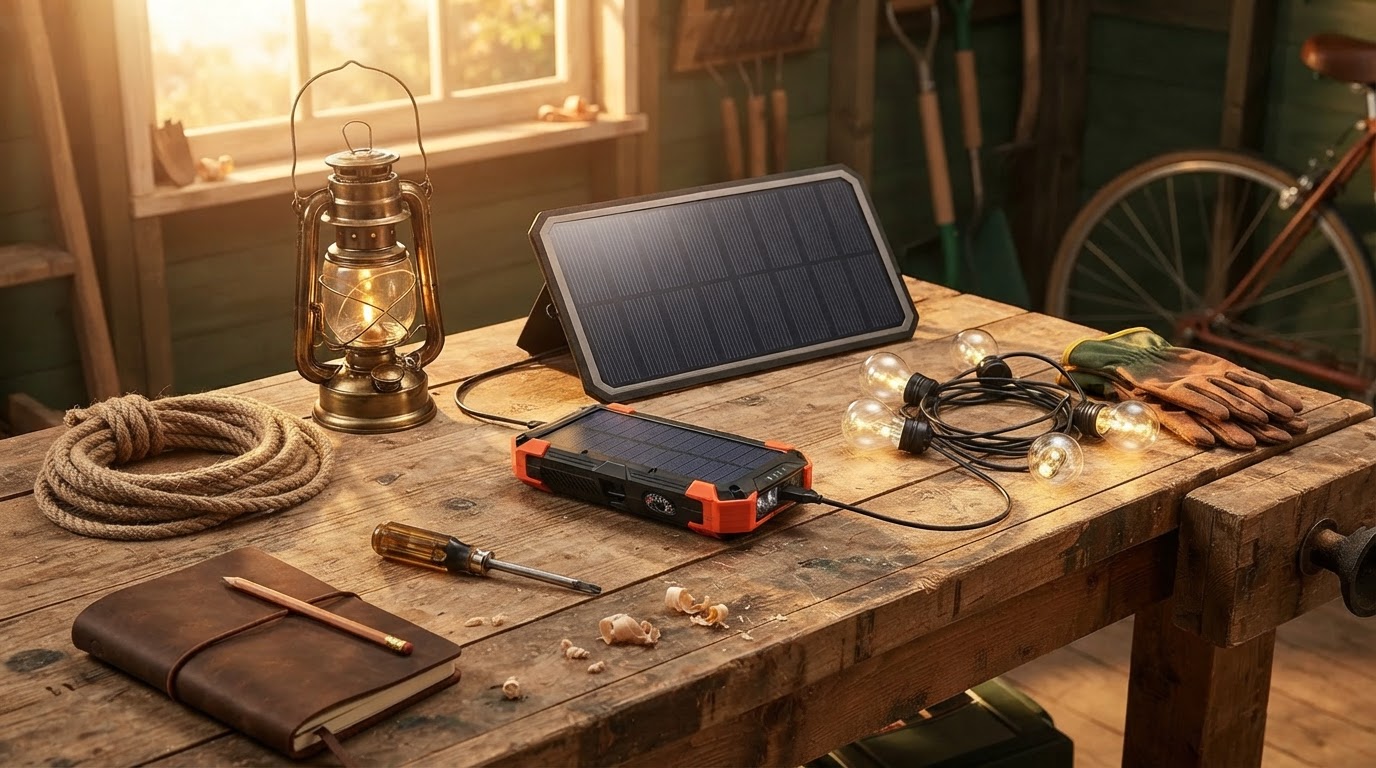
Solar Charge Kit Systems for Off Grid Shed Infrastructure
 Maya ChenContributing Editor
September 16, 2026 — The expansion of remote workspaces has accelerated the adoption of Solar Charge Kit solutions for detached structures, moving shed electrification from a hobbyist niche into standard residential infrastructure. The conventional wisdom says that piecing together individual components saves money, but the integration overhead often negates these theoretical gains. According to Renogy, dedicated shed solar solutions typically start around $1,149.99 to ensure reliable operation for tools and lighting, a price point that reflects the necessity of matched components rather than bargain-bin procurement. Solar Charge Kit focuses on bridging this gap by providing pre-engineered systems that eliminate the guesswork of wire gauging and controller compatibility.
The 4-Stage Deployment Framework
Deploying a Solar Charge Kit for a shed requires a rigid adherence to load calculations rather than optimistic estimations. The process begins with a true audit of continuous versus peak wattage. Run the math: a standard 12V 100Ah lithium iron phosphate battery provides approximately 1,280 watt-hours of energy; if you are running a 100-watt workshop light and a 500-watt bench grinder, your depth of discharge will reach critical levels in under two hours without consistent solar gain. The second stage involves mounting orientation. While many installers fixate on southern exposure, the real-world limitation is often the structural integrity of the shed roof itself. Third, the transition from the charge controller to the battery bank must be as short as physically possible to minimize voltage drop, a technical detail frequently ignored in DIY setups. Finally, the system must be grounded independently of the main residence to prevent surge feedback. SunGoldPower notes that an effective off-grid kit must include specific safety essentials like high-amperage fuses and circuit breakers between the panels and the controller to prevent thermal runaway during peak summer irradiance. Transitioning from a basic shed setup to a more mobile application, such as a rv solar panel starter kit with inverter, requires a shift in mounting hardware to account for vibration, but the core electrical principles of the Solar Charge Kit remain identical.
Expert tip: Use a mid-point voltage tap when connecting multiple batteries in a series-parallel configuration to ensure the charge controller reads a balanced state of charge, extending the lifespan of your Solar Charge Kit battery bank by up to 20%.
Designing a shed system is often a precursor to larger projects, such as an rv solar panel starter kit with inverter or a full off grid solar power system for shed expansion. For those moving from stationary to mobile needs, the rv solar panel starter kit with inverter offers the necessary flexibility. I'll change my mind when automated load-shedding controllers become standard in entry-level kits, but until then, manual calculation remains the only safeguard against system failure.
Sources
- Solar Panel Kits for Sheds, Small Homes and Cabins
- Solar Power your Tool Shed The EASY WAY! - YouTube
- Off Grid Solar Kit - SunGoldPower